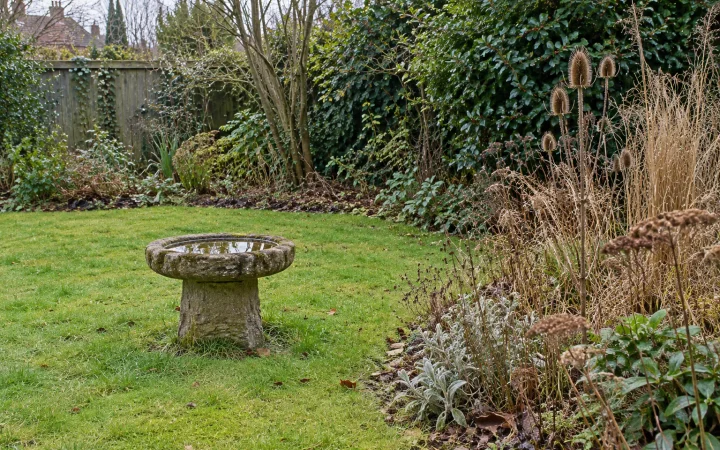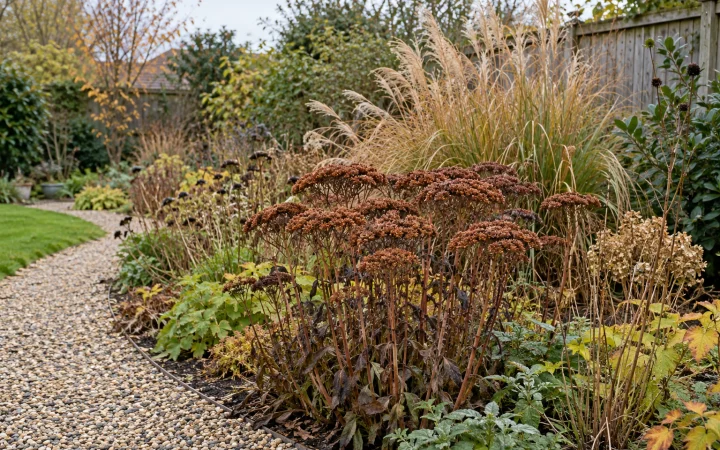
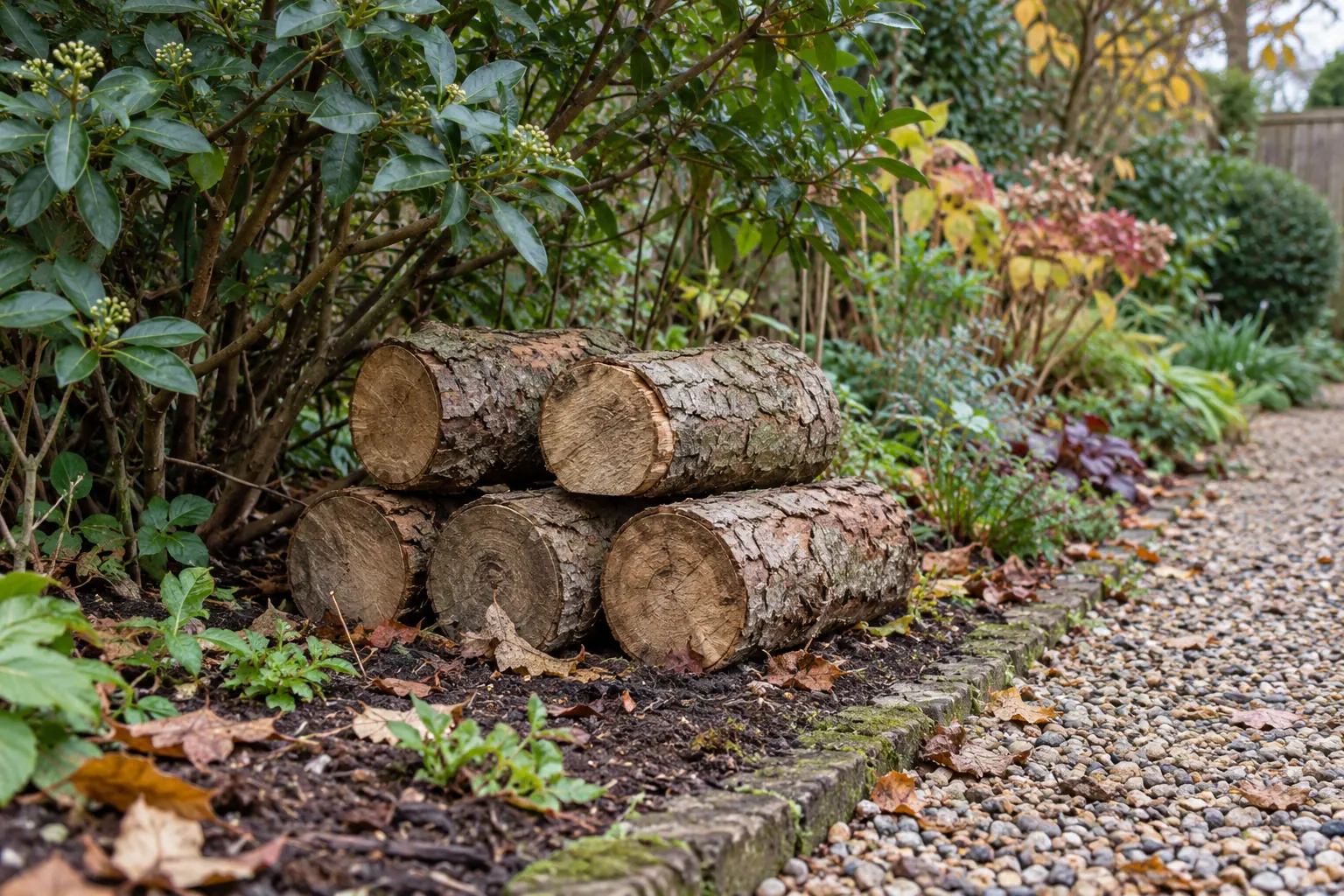
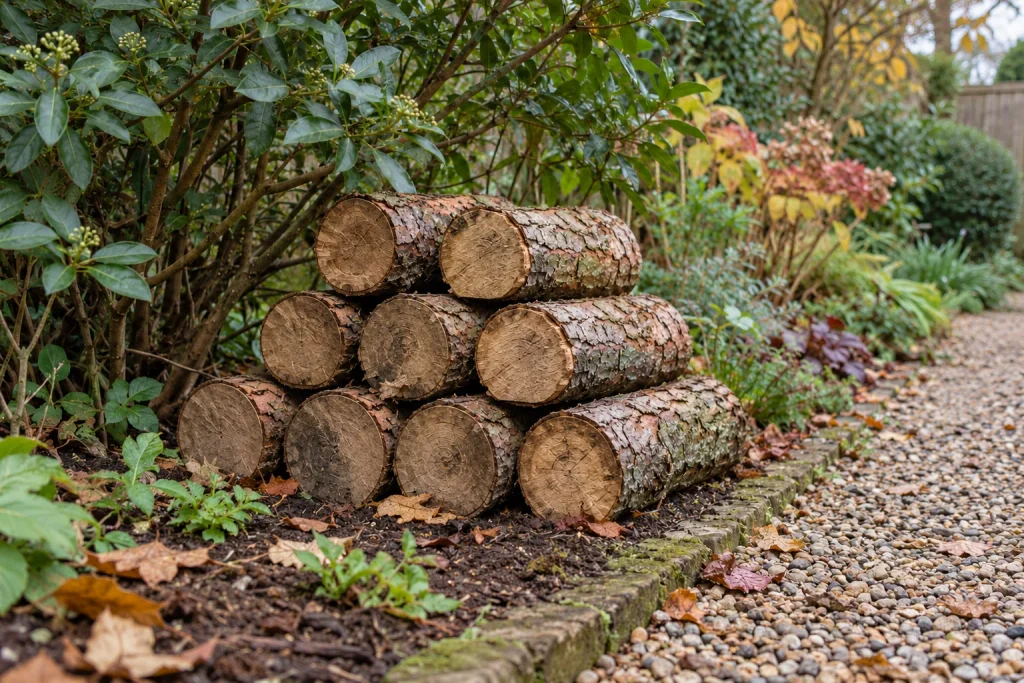
A log pile for wildlife can fit into a quiet corner of a small garden. Use a few pieces of untreated wood, put the bottom logs in contact with soil and build a low, stable pile that you can leave in place.
As the wood softens and the spaces between it become occupied, the pile provides places to hide, feed and shelter. The most useful feature is often the one that stays undisturbed.
Why leave logs in the garden?
Dead wood supports fungi and a range of small animals. Bark, cracks and the spaces between logs offer different conditions, from damp cover near the ground to drier gaps above.
Woodlice, beetles and other invertebrates can use this habitat. They also become food for creatures such as birds, frogs and hedgehogs. A pile may provide shelter for larger visitors, but it cannot guarantee that any particular species will move in.
You can keep this area small and deliberate. A defined corner at the back of a border leaves room for the rest of the garden to work as usual.
Choose somewhere it can stay
For the simple pile described here, choose a sheltered spot in partial shade with soil beneath it. The edge of a shrub border or the base of a hedge can work well.
Shade helps the wood retain moisture. A sunny pile can support different wildlife too, so an imperfect spot is still worth considering. Aim for a range of conditions across the garden rather than trying to make every feature identical.
If you have a pond, nearby logs and vegetation can provide cover for amphibians away from the water. Keep the pond edge and any escape slope accessible.
Leave room to use paths, open gates and maintain boundaries. Choose a place you will not need to clear when a new planting scheme or delivery arrives.
Find suitable wood
Start with branches or logs from suitable tree work in your own garden. A neighbour or local tree surgeon may also have useful pieces. Ask where the wood came from and whether there were disease concerns.
Choose untreated natural logs of mixed thicknesses, preferably with bark attached. Broadleaved wood is a good starting choice. Shorter pieces are easier to arrange in a confined space, while a few substantial logs give the pile structure.
Avoid painted or preservative treated timber, sharp fixings and material from trees known to have a serious disease. Wood affected by honey fungus needs separate management. Do not assume that adding it to a wildlife pile makes it suitable to keep or move.
Leave fallen woodland logs where they are. They already provide habitat, and moving them into a garden removes that habitat from somewhere else.
Build a small log pile in four steps
You will need a few manageable logs, some loose fallen leaves and gloves. A hand trowel is useful for settling the base. There is no need to buy a habitat kit.
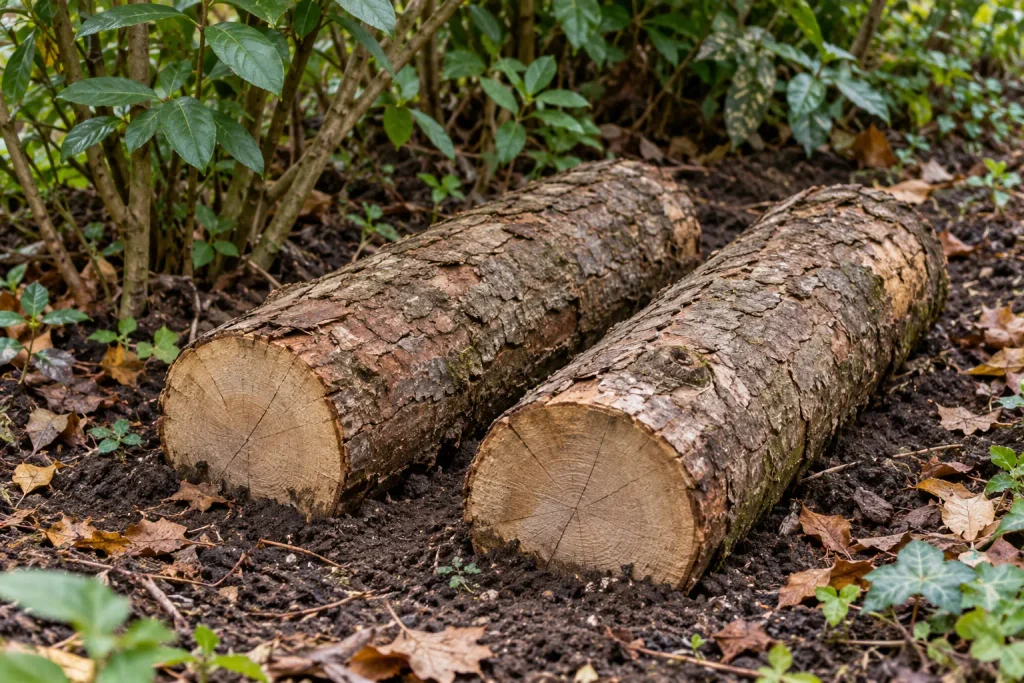
1. Settle the bottom logs into the soil
Move aside enough loose material to see where the first logs will sit. Nestle them a few centimetres into the soil so they make good contact and resist rolling.
Work around existing roots and plants. Use a smaller log or a different position if making the base would damage them.
2. Add a low second layer
Place more logs where they rest securely against the base pieces. Keep the pile broad and low. Check each piece for wobbling or rolling before adding the next.
Stop while the stack is stable. A few well placed logs are enough to begin with, and a single substantial log can also be useful where space is tight.
3. Keep some gaps and add leaves
Let the different shapes create spaces between the wood. Tuck a little loose leaf litter around the base and into a few gaps, leaving other openings clear.
Avoid packing every space tightly or covering the whole pile in garden waste. Keep the logs as the main structure, with leaves adding variation around them.
4. Leave the pile to settle
Check that the finished pile does not obstruct a path or lean against something that needs regular access. Then leave the wood in place to weather and decay.
Resist lifting the logs to look for occupants. Watch from the edge instead, and allow nearby cover to develop without swallowing small plants.
What happens as the logs decay?
Fungi help break down the wood and return nutrients to the soil. The softening material and new cavities create further opportunities for small creatures.
Fungal growth on dead wood is often part of this normal process. It does not, by itself, show that the pile is harming living plants. Equally, an unidentified mushroom should not be treated as proof that all the wood is healthy.
Keep known disease problems separate from ordinary decay. If a nearby living tree or shrub is declining, investigate that problem on its own merits.
Keep it useful through the seasons
There is no annual rebuilding job. Inspect from outside for instability, especially after storms or when the wood has softened. Avoid disturbing an occupied pile.
When more suitable wood becomes available, extend the habitat alongside the existing pile where space allows. Keep established decaying pieces in place instead of replacing them all with fresh logs for appearance.
For autumn border decisions nearby, see what to cut back in autumn and what to leave until spring. For water, feeding and access, use our guide to helping garden wildlife through winter.
Common questions
Can I use spare firewood?
Yes, if it is untreated natural wood from a suitable source. Bark covered pieces add useful texture. Keep the habitat pile separate from logs you intend to burn so it can remain undisturbed.
Do I need to bury the whole pile?
No. For this simple design, shallow soil contact at the base is sufficient. Specialist stag beetle designs use more deeply buried broadleaved logs. Follow the PTES guidance if that is your aim. Stag beetles will only colonise where they occur locally.
Will it attract slugs?
Slugs and other small creatures may use sheltered, damp places. A log pile supports a community of animals and fungi, including predators. It should not be presented as a guaranteed cure for feeding damage elsewhere in the garden.
Sources and further reading
Advice checked 21 October 2026.
- RHS: Dead wood and compost heap habitats
- The Wildlife Trusts: How to make a log shelter
- PTES: How to build a log pile
- RHS: Saprotrophic fungi
GHUK content is written for UK growing conditions and informed by hands-on professional gardening experience. It is designed to be practical, clear and useful in real gardens.