
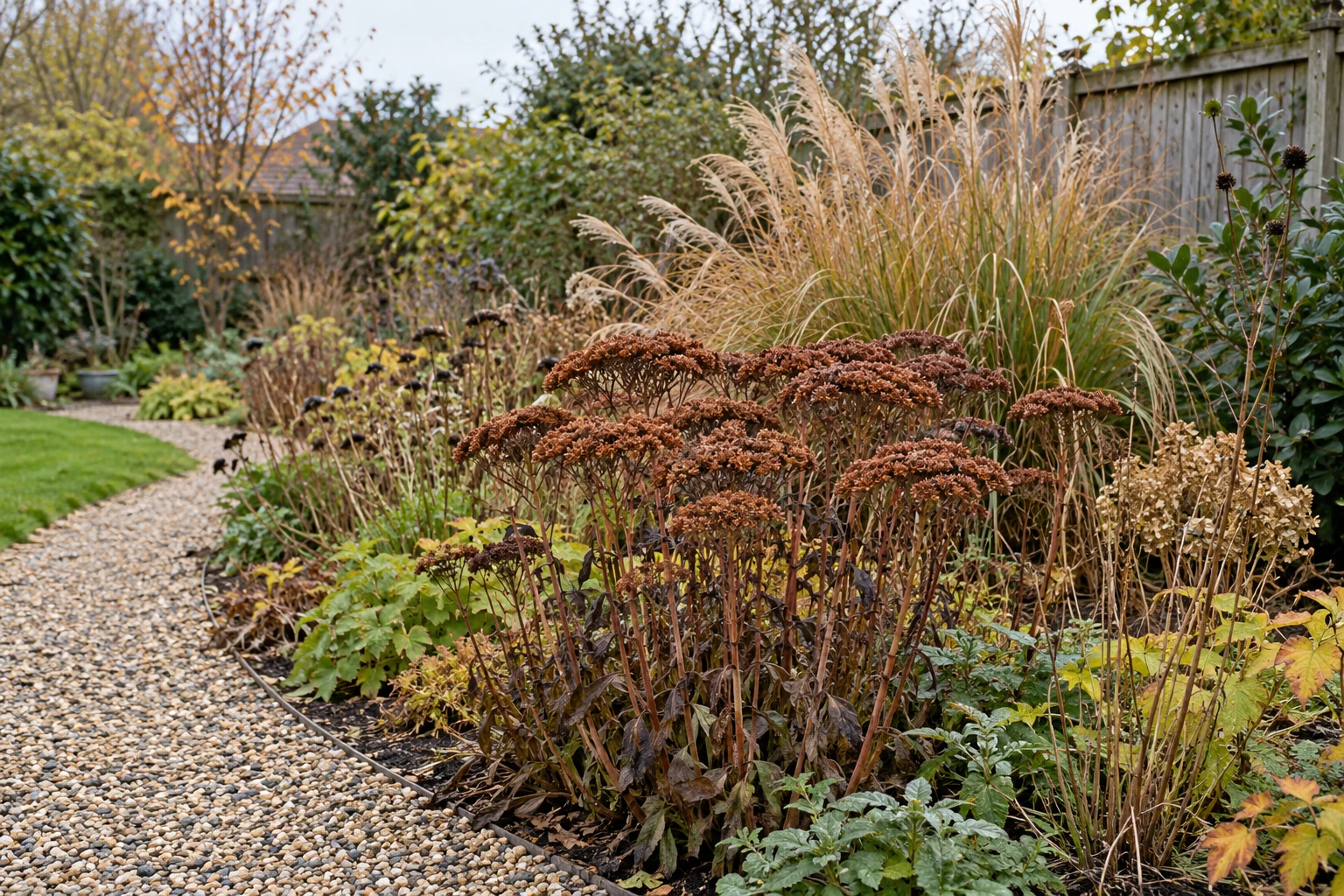
Autumn borders rarely finish all at once. A hosta may have collapsed into yellow leaves while a nearby sedum still holds its flowerheads upright. Treating both in the same way means missing the different jobs those plants need.
Clear dead, collapsed growth where necessary, but keep sound stems and seedheads that offer winter interest, food or shelter. Leave penstemons until spring and check the pruning needs of woody plants before cutting.
The aim is a border you can look after through winter, with useful habitat still in place.
Autumn cutting back at a glance
| Plant or material | What to do |
|---|---|
| Hosta foliage | Remove leaves and old flower stalks once they have died back. |
| Herbaceous peony stems | Cut down dead growth in autumn. Do not apply this to woody tree peonies. |
| Sedum, also called Hylotelephium | Keep upright dead stems through winter, then cut them back as new growth appears in spring. |
| Astilbe | Leave sound faded plumes for winter interest and shelter. Tidy in spring. |
| Deciduous ornamental grasses | Usually retain through winter and cut back in spring, with timing suited to the species. |
| Evergreen grasses and sedges | Usually remove dead material individually rather than cutting off all green foliage. |
| Penstemons | Retain the old framework through winter. Prune after the main frost risk has passed. |
| Mophead hydrangeas | Usually leave faded flowerheads until spring. Identify other hydrangea types before pruning. |
| Lavender | Avoid a late, hard cut. Never cut back into bare old wood as a routine tidy. |
What is worth clearing in autumn?
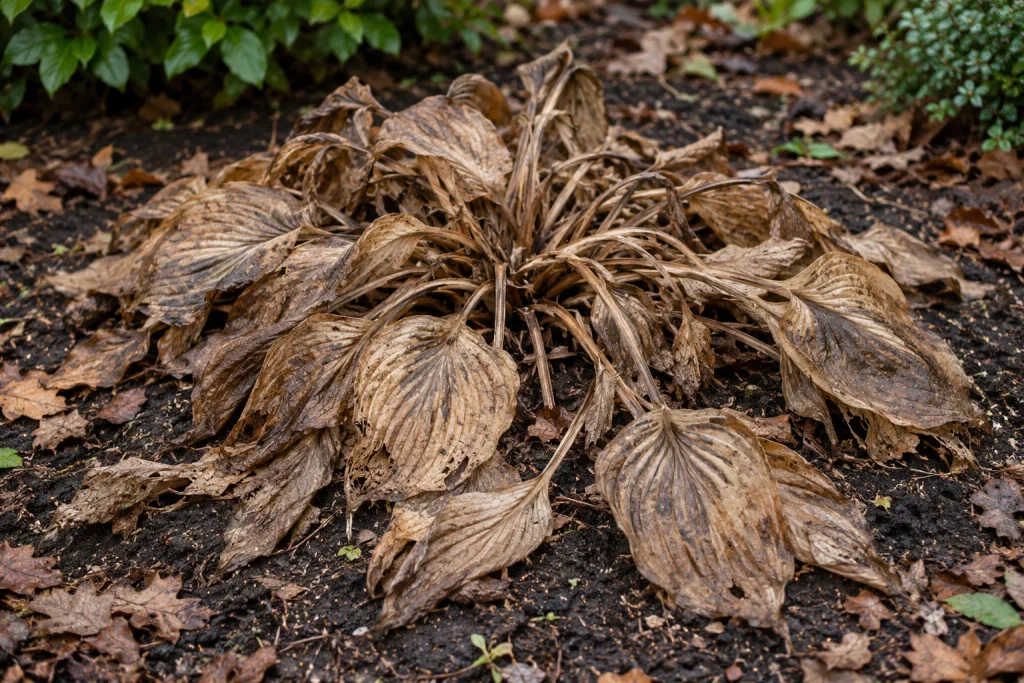
Dead hosta leaves
Hostas lose their foliage as the season ends. Once leaves have died and collapsed, remove them and the old flower stalks. Keep healthy green leaves while they are still functioning.
Mark the position of the clump if it is easy to forget where it sits. The plant will be dormant for several months, so a discreet marker makes nearby planting and weeding easier.
Dead herbaceous peony stems
Herbaceous peonies die down each year and their dead stems can be cut back in autumn. Collect the fallen foliage as well, particularly where the plant has had disease problems.
Check which peony you have first. A tree peony has a permanent woody framework and should not be cut to ground level as part of this job.
Growth that has collapsed or become diseased
Remove material that is smothering neighbouring plants or obstructing a path. Separate diseased leaves and stems from healthy material destined for the compost heap. Follow disposal advice for the particular disease and check what your council accepts.
Brown growth alone is not a disease diagnosis. Dry, intact stems can still be useful.
What can stay until spring?
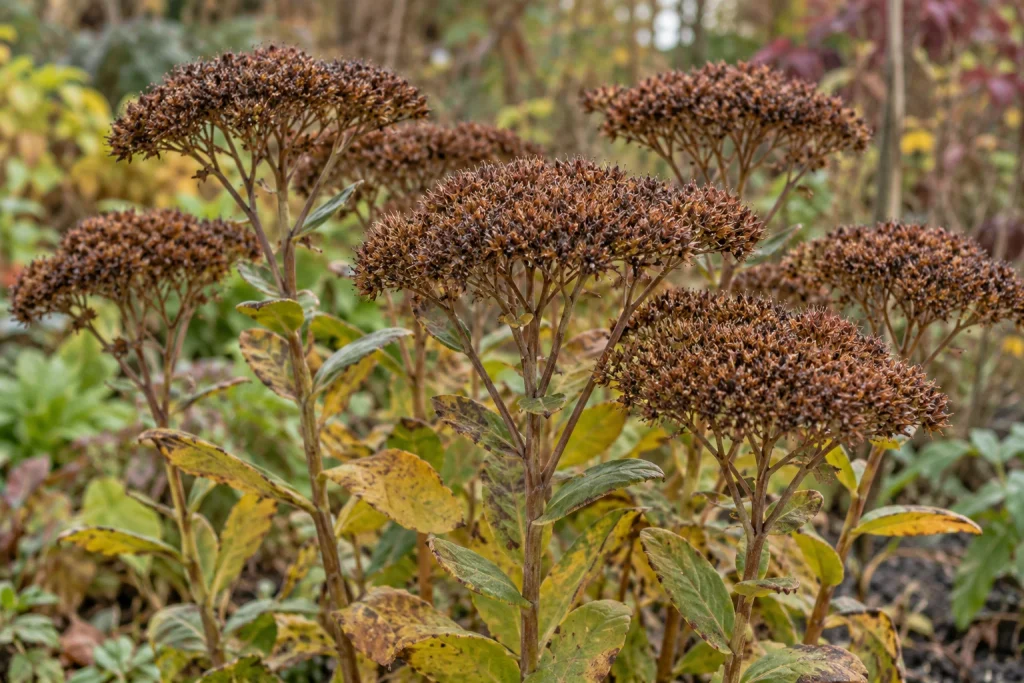
Sedum flowerheads
Border sedums, now usually sold as Hylotelephium, have flowerheads that often remain upright after flowering. Leave those stems where they are sound and attractive.
Cut the old stems back in spring as the fleshy new shoots emerge at the base. Look into the clump before cutting so you can work around the new growth.
Astilbe plumes
Astilbe flowers fade into feathery brown plumes that can remain attractive in winter. Their old stems and foliage can also provide shelter for small creatures.
Keep sound growth until spring. You can still remove an individual stem that has fallen across a neighbouring plant without clearing the whole clump.
Deciduous ornamental grasses
Grasses such as Miscanthus can hold their shape well through winter. Their stems catch the low light and give a border height when many flowers have disappeared.
Cut back deciduous types in spring, avoiding emerging shoots. Timing varies: Miscanthus is often tackled from mid March to April, while some later grasses need a later cut.
Evergreen grasses and sedges need different treatment. With plants such as Carex, remove loose dead leaves and cut out individual dead strands where needed. Preserve the living green foliage. Check the species if you are unsure, as there are exceptions to these broad groups.
Leave penstemons through winter
Penstemons are a common casualty of an enthusiastic autumn tidy. Their old stems help protect the crown from cold, so leave the main growth in place through winter.
Prune in spring once the main frost risk has passed, often in April or May depending on the garden. Look for fresh growth and make cuts above healthy shoots. Do not cut every plant to an identical height without checking where it is growing from.
Keep woody plants out of the general cutback
Hydrangeas
For mophead hydrangeas, leaving the old blooms through winter helps protect the growth buds below. In spring, remove faded heads above a strong pair of healthy buds.
Other hydrangeas need different treatment. Paniculata and arborescens types flower on new growth and are generally pruned in spring. Climbing hydrangeas are normally pruned after flowering in summer. Identify the plant before treating every brown flowerhead as a signal to cut.
Lavender
Lavender is a woody shrub, even when it sits among perennials. Its usual annual trim is in late summer after flowering. Do not compensate for a missed trim with a severe cut as winter approaches, particularly in a cold or wet garden.
Keep cuts within leafy growth. Lavender does not readily grow back from bare old wood, so cutting it to the ground can leave a gap rather than a rejuvenated plant.
Keep useful winter habitat
The material left in a border has a purpose. Seeds can feed birds, while stems and leaf litter provide places for insects and other small creatures to shelter. You do not need to clear every bed to the same finish.
Keep a few areas of healthy, upright stems. Where space allows, retain teasel seedheads for birds rather than removing every finished flower. Control unwanted seedlings later if necessary.
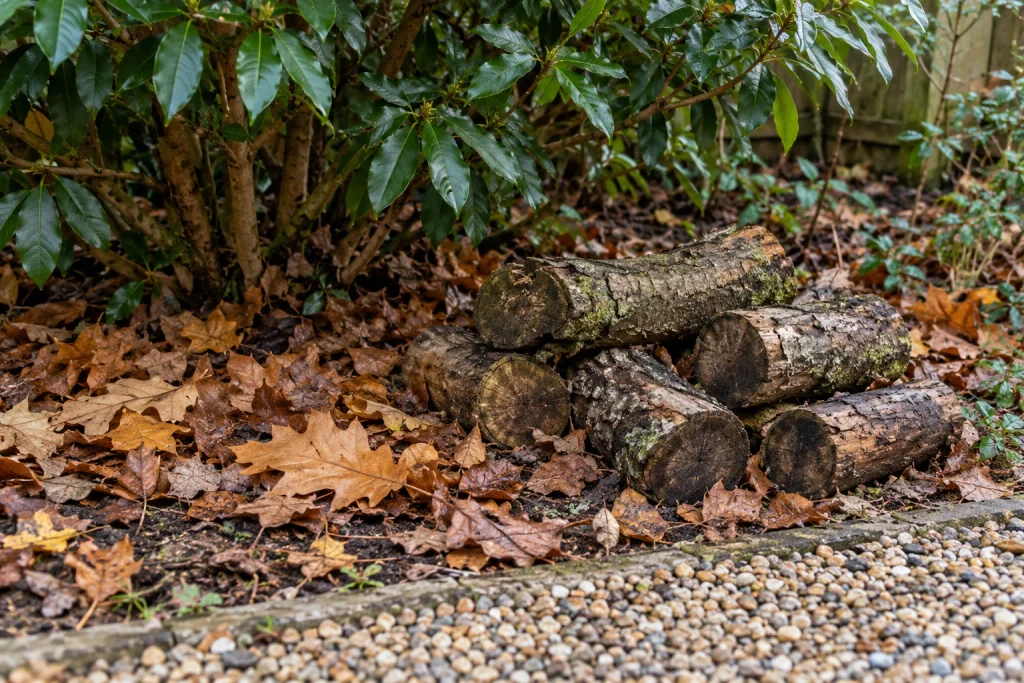
Move some leaves cleared from paths and grass beneath established shrubs, where they can form sheltered litter. Keep access routes clear and avoid burying small plants beneath a dense heap.
Sound woody prunings can form a small habitat pile in a quiet corner. Check existing leaf and log piles before disturbing them, especially through autumn and winter. A pile already being used as shelter is best left in place.
A simple way to work through the border
- Identify the plant before making the first cut.
- Decide whether the old growth is sound, collapsed or diseased.
- Keep useful stems and shelter where they fit the space.
- Where cutting is appropriate, check for new shoots before using sharp secateurs.
- Keep healthy compost material separate from diseased waste.
Avoid working across saturated soil. If access would compact the border, wait for better conditions and tackle what you can reach from a path.
When should the spring tidy begin?
There is no single date for every plant or UK garden. Many hardy perennials can be tidied from March, while borderline hardy plants may need to wait until April or May. Watch local weather and the plant's growth rather than treating the calendar as a deadline.
Work in sections so some cover remains while other areas are tidied. Before cutting into an old clump, look for fresh shoots and sheltering wildlife. Leave anything occupied undisturbed.
For related winter jobs, see our guides to overwintering dahlias, cold weather and frost and making leafmould.
Sources and further reading
Advice checked 19 October 2026.
- RHS: Perennials, cutting back
- RHS: Cutting back ornamental grasses
- RHS: Hydrangea pruning
- RHS: Growing lavender
- The Wildlife Trusts: Help wildlife in the cold
GHUK content is written for UK growing conditions and informed by hands-on professional gardening experience. It is designed to be practical, clear and useful in real gardens.