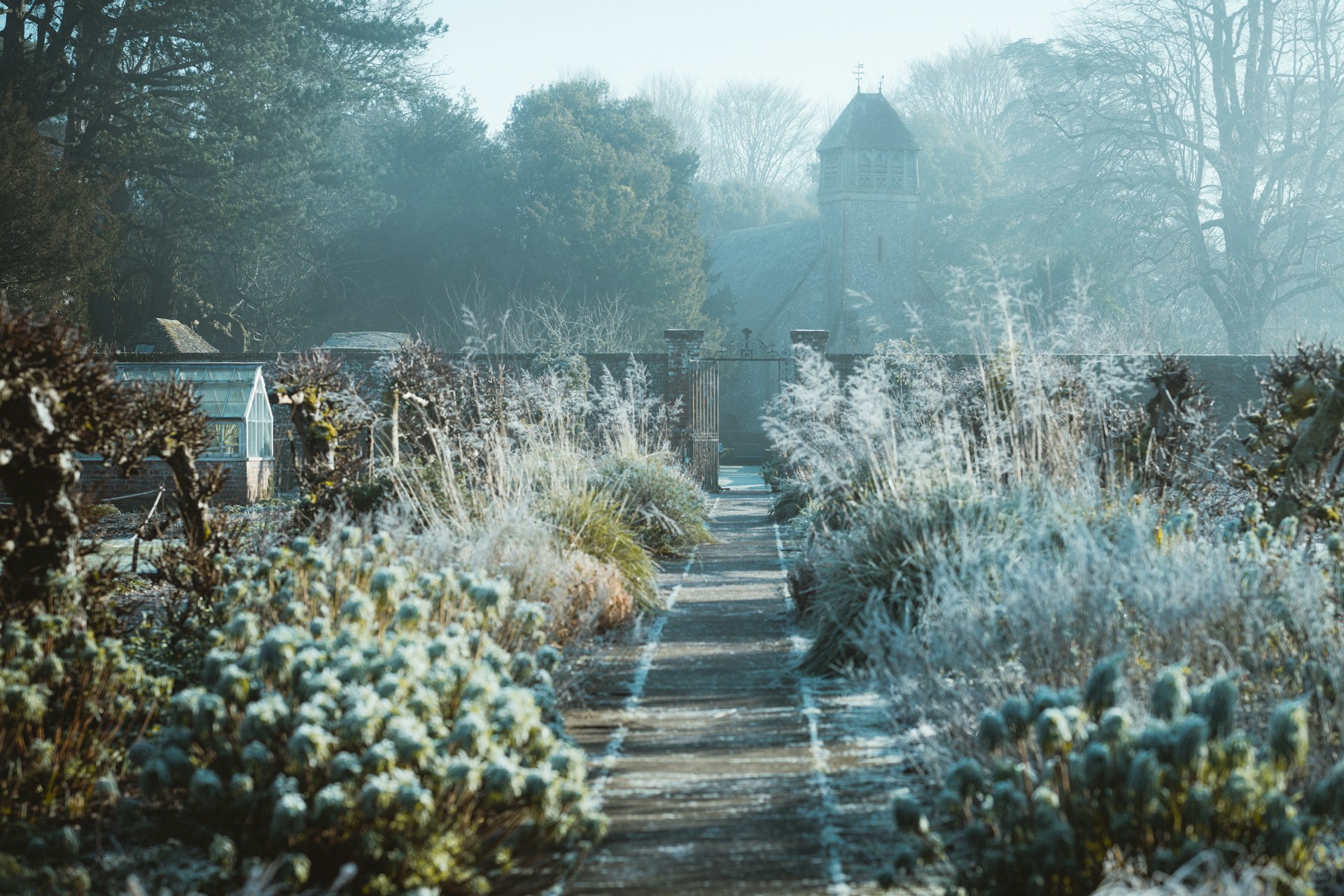
You can help garden wildlife in winter by keeping water available, preserving shelter and making room for natural food. A small garden can offer all three without a major redesign.
Start with what is already there. A hedge, a quiet patch of fallen leaves or an old tree can be useful winter habitat. Add feeding only where you can keep it clean, and check that animals can move safely through the space.
Where to start
- Keep an existing pond accessible, or provide a shallow water container you can maintain.
- Retain some leaves, sound dead stems and sheltered corners.
- Follow current seasonal guidance if you feed birds.
- Keep safe routes between gardens open for hedgehogs.
- Check for wildlife before moving piles or using garden machinery.
Choose the jobs you can sustain. One clean water bowl and a corner left undisturbed are useful starting points.
Keep drinking water available
Frozen water can make drinking difficult even when the garden looks wet. Check small containers during cold spells and replace frozen water with fresh, tepid water.
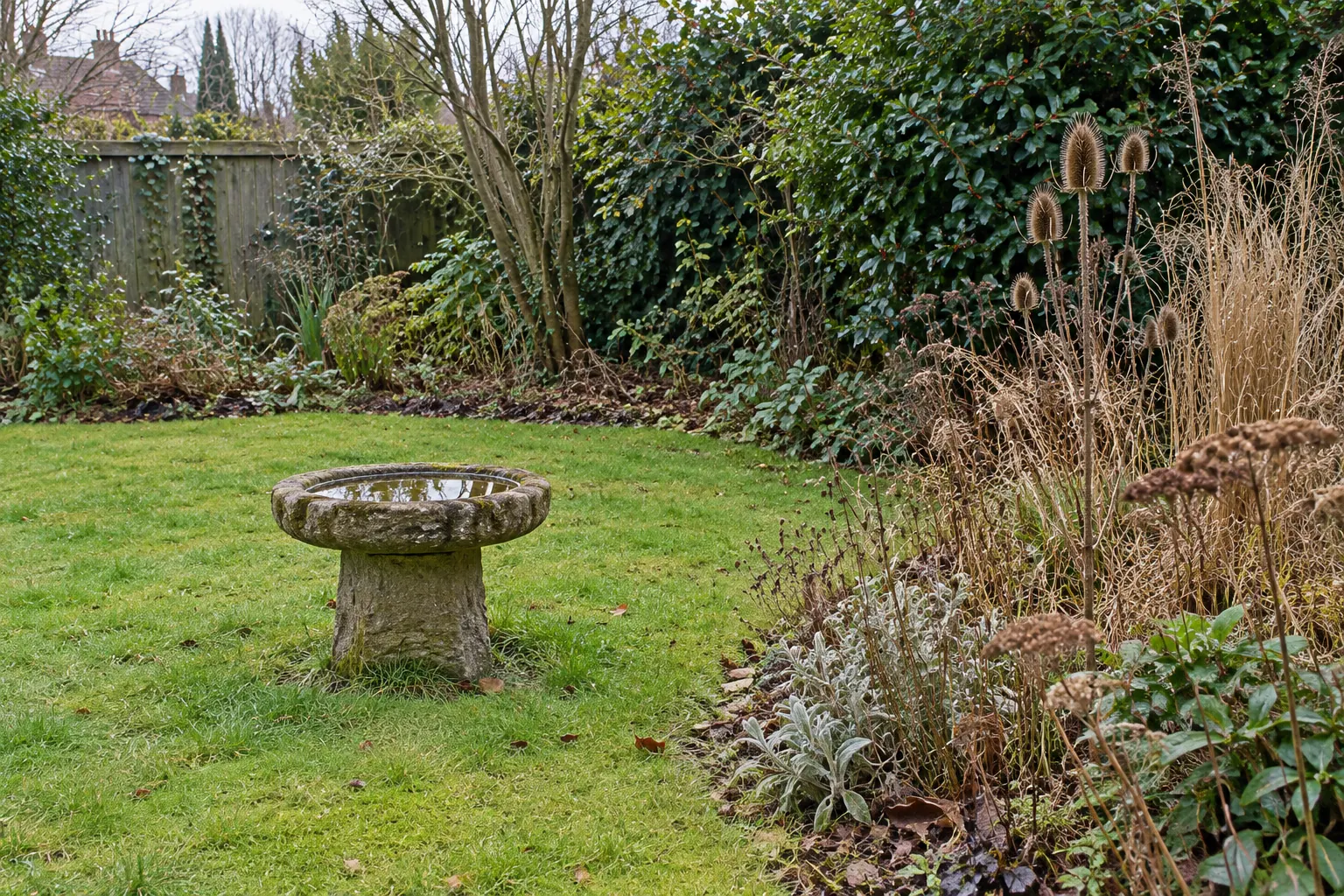
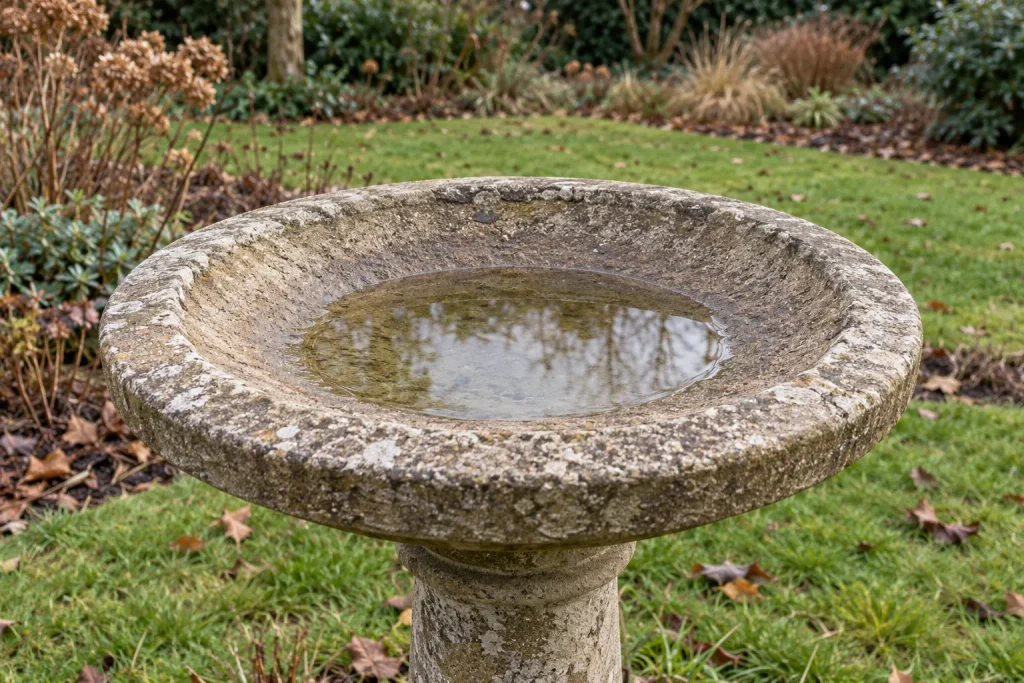
Use a shallow dish or a bird bath with a rough surface and gradual edges, so visitors can stand securely and get out. Place it where cats cannot easily ambush birds, with cover within reach.
For birds, change the water daily and clean the container at least weekly. RSPB recommends tap water, with an exception where supplies contain chloramine: use an elevated bird bath, or rainwater in a ground level bath. Your water company can confirm how it treats the supply.
If birds already have access to a suitable pond nearby, RSPB says an extra bird bath is unnecessary unless that water freezes or dries up. For a ground level drinking bowl used by hedgehogs, keep it shallow, clean and topped up.
Feed birds seasonally and keep feeders clean
Bird feeding advice changed in 2026. RSPB now recommends offering seeds and peanuts only from 1 November to 30 April. Pause them from 1 May to 31 October. Small amounts of suet, fat balls or mealworms can still be offered throughout the year.
The change aims to reduce the spread of trichomonosis, a disease affecting garden birds. RSPB also advises against bird tables and other flat feeding surfaces, including trays beneath feeders. See its current seasonal feeding guidance.
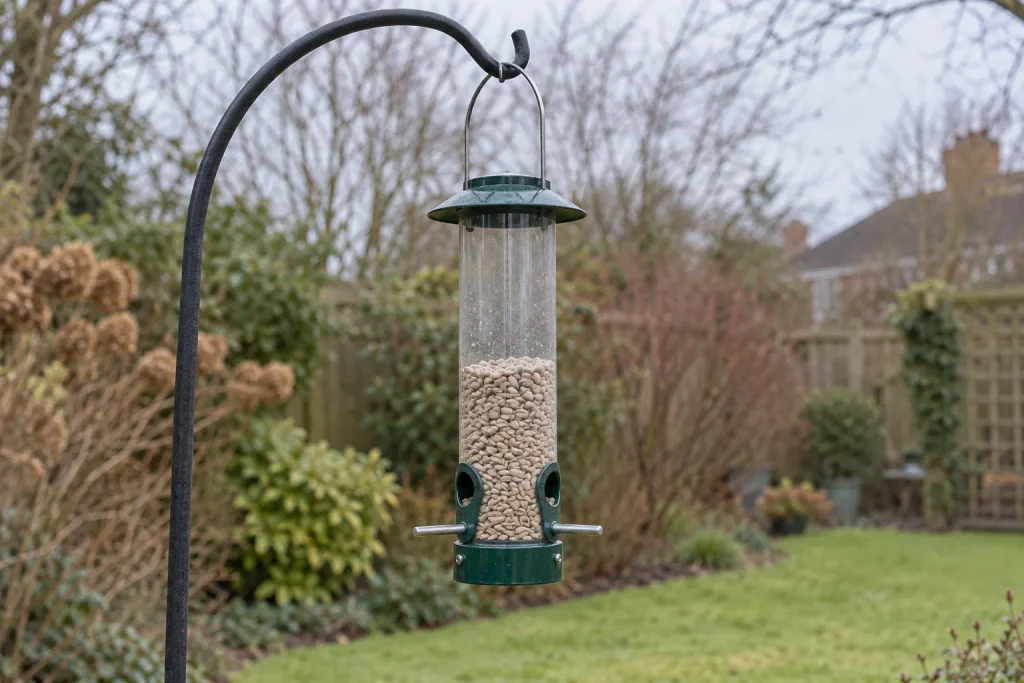
For winter feeding, choose hanging feeders suited to the food. Offer peanuts in a rigid mesh feeder. Put out small quantities, adjusting them to what birds actually eat, and remove old food before refilling.
Keep food dry. Clean feeders at least weekly, clear debris below them and move them to a different spot after cleaning. Use dedicated cleaning tools outdoors, wear gloves and wash your hands afterwards. Follow the disinfectant instructions and rinse thoroughly.
If you see sick birds at the feeders, stop feeding and consult RSPB’s feeding and hygiene advice. Its current guidance says to wait four weeks before resuming, repeating the pause if more sick birds appear.
Leave some natural food in place
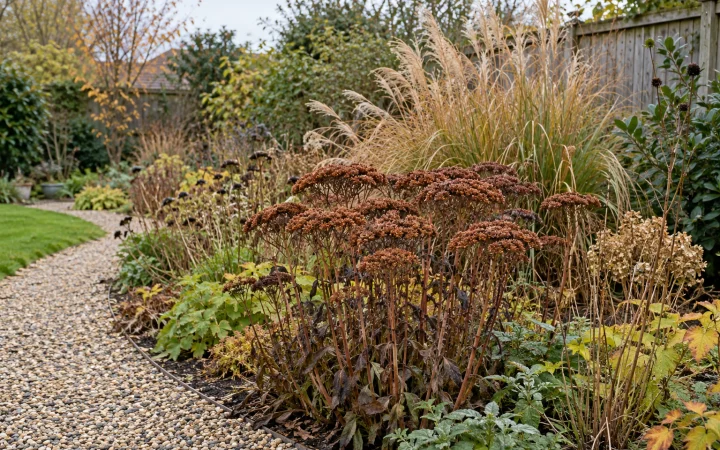
Berries, seeds and invertebrates make the garden useful beyond a feeding station. Keep some seedheads standing where they remain sound. Teasels and sunflowers can provide seeds for birds, while leaf litter offers places to search for small creatures.
Established ivy is valuable for both food and cover. Mature flowering growth produces berries later in the season, helping birds when other supplies have dwindled. Holly, hawthorn and crab apples can also contribute food where the plants suit the space.
You do not need to plant everything. Look at the garden first: could a berrying shrub stay untrimmed a little longer, or a healthy seedhead remain until spring?
For plant by plant decisions, use our guide to what to cut back in autumn and what to leave until spring.
Make space for winter shelter
Leave a layer of fallen leaves beneath established shrubs where it will not smother smaller plants. Clear paths for access, but avoid treating every patch of soil as something that needs sweeping bare.
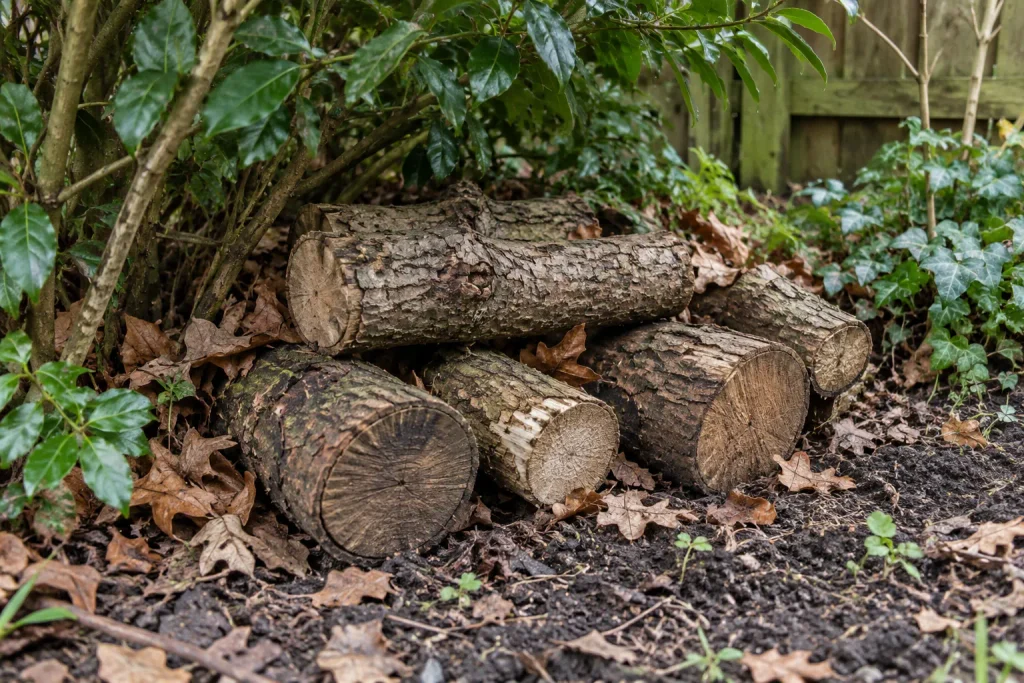
A small group of logs in a sheltered corner creates gaps and decaying wood for invertebrates. Those creatures also provide food for visiting birds and other wildlife. Keep the pile low and stable, with some wood touching the soil.
Once a pile is established, leave it in place. Rebuilding it for a neater finish can disturb the habitat you were trying to create.
Bird boxes can offer winter roosting places too. Choose a design and position suited to the birds you hope to help. If cleaning an existing box in autumn, first confirm it is unoccupied and follow the RSPB nestbox guidance. Leave any occupied box undisturbed.
Keep routes open for hedgehogs
Food and shelter are more useful when animals can reach them. Hedgehog Street recommends a 13 cm by 13 cm gap in or beneath a fence to connect gardens. Agree changes with the boundary owner and check that the route leads somewhere safe.
If hedgehogs visit, offer fresh water in a shallow bowl. Suitable supplementary food includes meat based wet cat or dog food, or dry cat food. Put it away from sleeping nests, remove leftovers and keep bowls clean. Do not give milk or bread.
Continue offering food through winter while it is being eaten. Hedgehogs can wake during hibernation, so activity does not follow one fixed date. Watch demand and avoid leaving unwanted food to accumulate. Hedgehog Street explains suitable food and feeding arrangements.
Check ponds and garden hazards
Make sure ponds have a gently sloping edge or a secure, rough ramp that wildlife can use to climb out. Recheck the route after storms or maintenance.
A wildlife pond without fish does not usually need a hole made in the ice solely for oxygen. If you need to open a small drinking hole, melt it gently using a pan of hot water held on the surface. Do not smash the ice or pour hot water directly into the pond. Never add salt or antifreeze.
Before a bonfire, check thoroughly for sheltering animals. Build or rebuild the pile on the day it will be lit. Store unused netting safely and look through long vegetation before strimming. Avoid turning occupied leaf, log or compost piles during winter.
A simple winter routine
On your regular garden check, look at the water, remove spoiled food and make sure access routes are clear. After bad weather, check feeders, pond exits and any loose netting.
Then give the quieter areas time. Keep watching from a distance and leave sheltering wildlife undisturbed. A garden that provides cover, natural food and safe access can keep helping long after the daily jobs are done.
Sources and further reading
Advice reviewed 20 October 2026. Bird feeding guidance may change as new evidence becomes available.
- RSPB: Current guidance on feeding garden birds
- The Wildlife Trusts: Help wildlife in the cold
- The Wildlife Trusts: Water for wildlife
- Hedgehog Street: Link your garden
- RHS: Winter pond advice
GHUK content is written for UK growing conditions and informed by hands-on professional gardening experience. It is designed to be practical, clear and useful in real gardens.