If your garden struggles with drainage, drought, or poor plant growth, the reason is often beneath your feet.
Soil texture controls how water moves, how nutrients are held, and how roots grow. It explains why one garden dries out quickly while another stays wet for weeks, even in the same weather.
Once you understand soil texture, many problems in the garden suddenly make sense.
This guide breaks down what soil texture is, how to identify yours, and how to work with it and get better results in your garden.
Whether it’s raised beds, containers or in-ground beds, soil texture plays a vital role in everything that is going on.
What Is Soil Texture?
Soil texture describes the proportion of three mineral particles in your soil:
- Sand
- Silt
- Clay
These particles differ in size and behaviour, and the balance between the amounts present determines how your soil performs.
Soil texture is a physical property of soil that develops over thousands of years through geology and natural weathering. While it can be influenced with amendments and good management, soil naturally tends to revert towards its original texture over time. Understanding this helps set realistic expectations and encourages working with the soil rather than trying to permanently change it.

The Three Soil Particle Types Explained
Sand
Sand particles are the largest of the three.
Sandy soils feel gritty when rubbed between your fingers. They drain very quickly and warm up early in spring, which can be useful for early crops.
However, sandy soils struggle to hold water and nutrients. Rain and fertilisers pass straight through, leaving plants hungry and dry unless organic matter is added regularly.
Common in coastal areas and some parts of eastern England.
Silt
Silt particles are medium-sized and feel smooth or silky when wet.
Silty soils hold water better than sand and contain more nutrients, but they can compact easily and lose structure if overworked.
Pure silt soils are less common in gardens, but many UK soils contain a significant silt fraction.
Clay
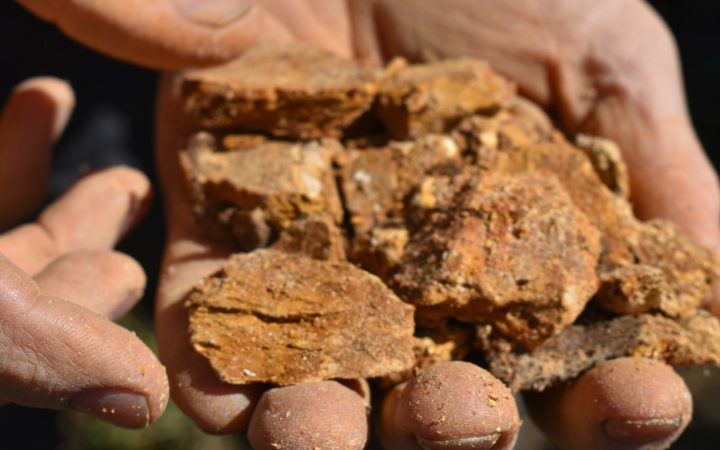
Clay particles are extremely small and tightly packed.
Clay soils feel sticky when wet and hard when dry. They drain slowly but hold onto nutrients very well.
In winter, clay soils can stay cold and waterlogged. In summer, they can bake hard and crack.
Much of the UK, especially inland and lowland areas, sits on clay-based soils.
What Is Loam?
Loam is not a separate particle type. It is a balanced mix of sand, silt, and clay.
Loamy soils combine:
- Reasonable drainage
- Good moisture retention
- Strong nutrient-holding ability
- Ease of cultivation
This balance makes loam ideal for most plants, but even loam benefits from good management.
The Soil Triangle
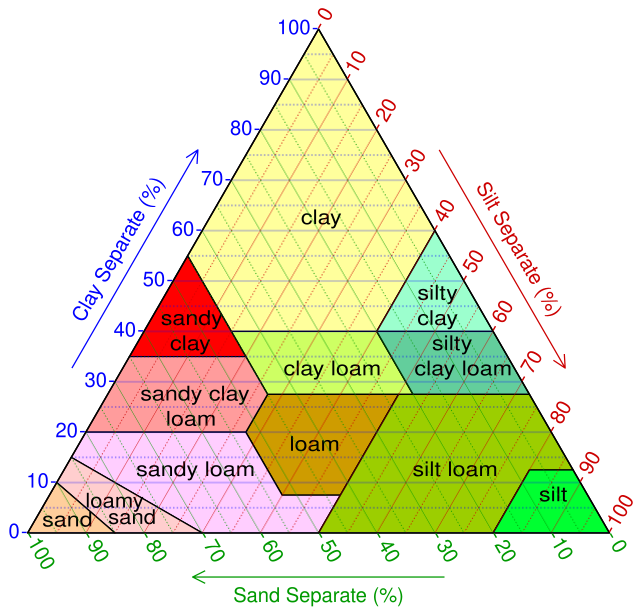
The soil texture triangle is a simple visual tool used to classify soil based on the proportions of sand, silt, and clay it contains. By plotting these percentages on the triangle, you can identify your soil type, such as sandy loam, silty clay, or clay loam. This helps explain how your soil behaves, including how quickly it drains, how well it holds nutrients, and how easily roots can grow. While the triangle does not tell you how healthy your soil is, it provides a useful framework for understanding the natural characteristics you are working with.
Check out our simple jar test guide, which shows you how to identify the percentages of sand, silt, and clay in your own soil. You can then compare and see where you land on the soil triangle.
Soil Texture vs Soil Structure
This is one of the most important distinctions in gardening.
Soil texture describes what the soil is made from: the relative proportions of sand, silt and clay. Soil structure describes how those particles are arranged and how much space exists for air, water, roots and soil life.
You cannot easily change your soil’s underlying texture, but you can make a substantial difference by improving its soil structure. Regular additions of organic matter, reduced compaction and careful cultivation can help even difficult soils perform better.
Many gardeners believe they have “bad soil” when the underlying texture is perfectly workable. The real problem is often compaction, poor drainage, low organic matter or damage caused by working the soil when it is too wet.
How Soil Texture Affects Your Garden
Soil texture influences almost every aspect of plant growth.
It affects:
- Drainage and waterlogging
- Drought tolerance
- Nutrient availability
- Root penetration
- Soil temperature
- Seasonal performance
Understanding your texture helps you choose the right plants and manage expectations.
A clay garden will never behave like a sandy one, but both can be productive and healthy when managed correctly.
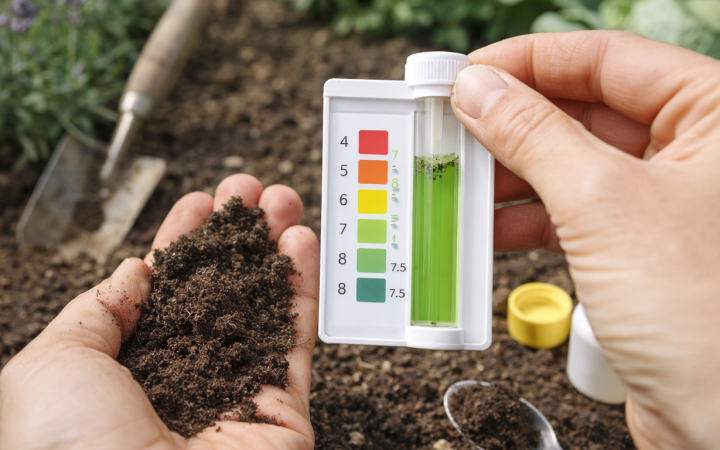
Texture explains many physical soil characteristics, but it does not tell you everything about fertility or nutrient availability. Two soils with a similar texture can have very different chemistry, so testing and understanding your soil pH can help explain plant problems that texture alone does not account for.
How to Identify Your Soil Texture at Home
You do not need laboratory tests to get a good understanding of your soil texture. There are a few simple tests you can carry out at home that will give you a clear idea of the proportions of sand, silt, and clay in your soil.
The ribbon test
This simple test works well for UK garden soils and can be easily carried out quickly while in the garden.
- Take a small amount of soil and remove stones and debris
- Moisten it until it feels like putty
- Roll it into a ball
- Press it between your thumb and finger to form a ribbon
Results:
- If it will not form a ribbon and falls apart, it is sandy
- If it forms a short ribbon that breaks easily, it is loamy
- If it forms a long, sticky ribbon, it is clay-based
This test is ideal for gardeners to carry out “in the field” and works well as a quick visual check.
The Jar Test
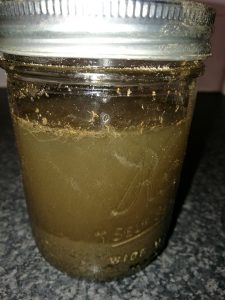
One of the easiest ways to fairly accurately identify your soil texture at home is the jar test. This simple method involves placing a soil sample in a clear jar, adding water, then shaking it well and leaving it to settle. Over time, the soil separates into layers, with sand settling first, followed by silt, and clay forming the finest layer at the top. Measuring these layers gives you a good estimate of the proportions in your soil. For a step-by-step guide, including tips on getting accurate results and interpreting what you see, our full jar test article explains the process in more detail.
Working With Different Soil Textures
Good gardening is about working with your soil, not fighting it.
Managing sandy soils
Focus on increasing organic matter.
- Add compost little and often
- Use mulches to reduce moisture loss
- Choose drought-tolerant plants
- Water deeply but less frequently
Organic matter acts like a sponge, improving water and nutrient retention.
For larger beds and borders, it is worth calculating quantities before buying compost or mulch. Our garden materials calculator works out how much you need from the area and application depth, including bag quantities and optional costs.
Managing clay soils
The priority is improving structure, not adding sand.
- Avoid working soil when wet
- Add compost, leaf mould, and organic matter
- Use deep-rooted plants to help break compaction
- Accept slower warming in spring
Never add sand to clay unless you are adding very large quantities with organic matter, as this can make the soil worse.
Well-rotted leafmould is particularly useful on clay soil because it adds organic matter without attempting to change the soil’s underlying texture. Our guide to making and using leafmould explains how to produce it from fallen leaves and use it as a soil conditioner or surface mulch.
Managing loamy soils
Loam still needs care.
- Maintain organic matter levels
- Avoid compaction from foot traffic
- Protect soil surface with mulches
- Keep soil covered where possible
Even good soils degrade if neglected.
Why UK Gardeners Should Stop Trying to Change Soil Texture
Many gardening myths suggest replacing soil or dramatically altering texture.
In reality, this is rarely practical or necessary.
Plants evolved to grow in a wide range of soil textures. Success comes from:
- Understanding your soil
- Choosing suitable plants
- Improving structure and biology
- Managing water correctly
Healthy soil is about function, not perfection.
Final Thoughts
Soil texture explains why gardens behave differently, even on the same street.
Once you understand whether your soil is sandy, clay-based, or loamy, you can stop guessing and start gardening with confidence.
You may not be able to change your soil’s texture, but you can always improve how it performs.
That is where great gardens are made.
GHUK content is written for UK growing conditions and informed by hands-on professional gardening experience. It is designed to be practical, clear and useful in real gardens.