Apple trees are generally reliable and long lived, but they can be affected by a surprisingly wide range of pests, diseases and growing problems.
The difficult part is often not knowing how to treat the problem. It is working out what is actually wrong in the first place.
Curled leaves may be caused by aphids. Dark patches on apples could be apple scab. Brown fruit may be suffering from brown rot, while a hole leading into the core could be caused by codling moth.
Some problems that look like diseases are not diseases at all. Bitter pit, drought stress, frost damage and poor pollination can all produce symptoms that cause concern.
This guide helps you diagnose common apple tree problems by starting with the symptoms you can actually see.
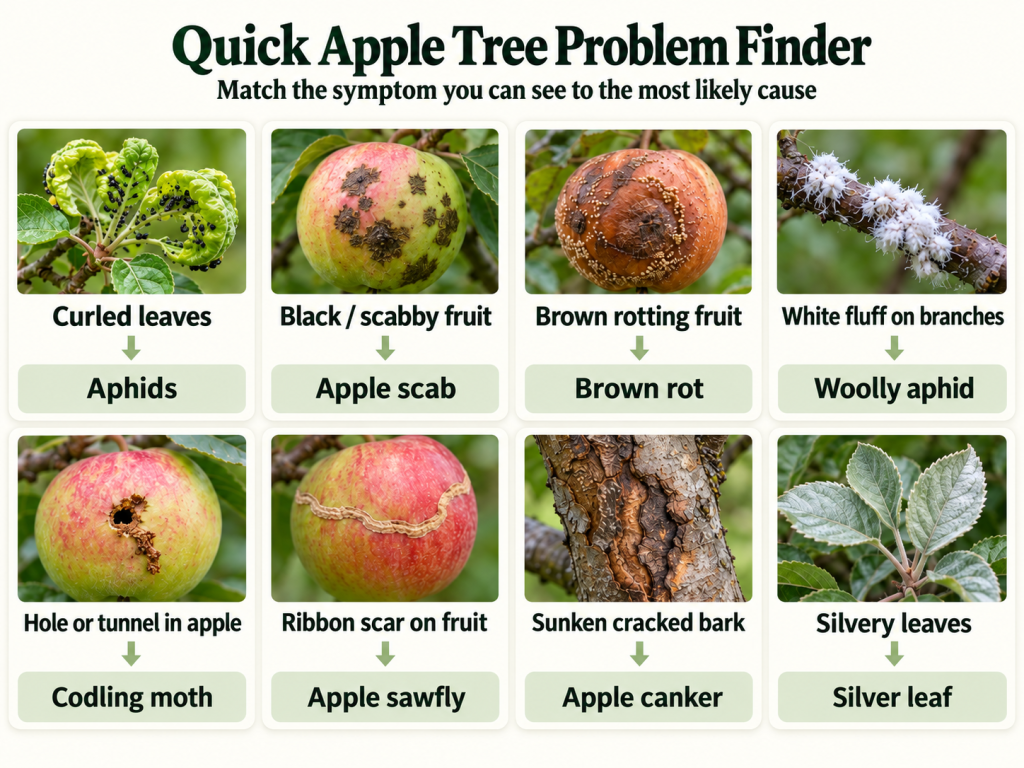
Quick Apple Tree Problem Finder
Curled and sticky young leaves
Most likely cause: aphids
Curled or distorted reddish leaves
Most likely cause: rosy apple aphid or another aphid species
White powder on young leaves and shoots
Most likely cause: apple powdery mildew
Olive green, brown or black patches on leaves
Most likely cause: apple scab
Dark scabby patches on apples
Most likely cause: apple scab
Apples turning brown and rotting
Most likely cause: brown rot
Brown rotten fruit with pale raised spots
Most likely cause: brown rot
Small hole in the fruit with damage towards the core
Most likely cause: codling moth
Young apples dropping early with internal damage
Most likely cause: apple sawfly
Long ribbon shaped scars across young fruit
Most likely cause: apple sawfly
Small dark sunken spots on apples
Most likely cause: bitter pit
White fluffy material on branches
Most likely cause: woolly aphid
Sunken or cracked areas of dead bark
Most likely cause: apple canker
Silvery leaves, often affecting individual branches
Most likely cause: silver leaf
Shoots suddenly wilting or dying after flowering
Possible causes: blossom wilt or, less commonly, fireblight
Apple Scab
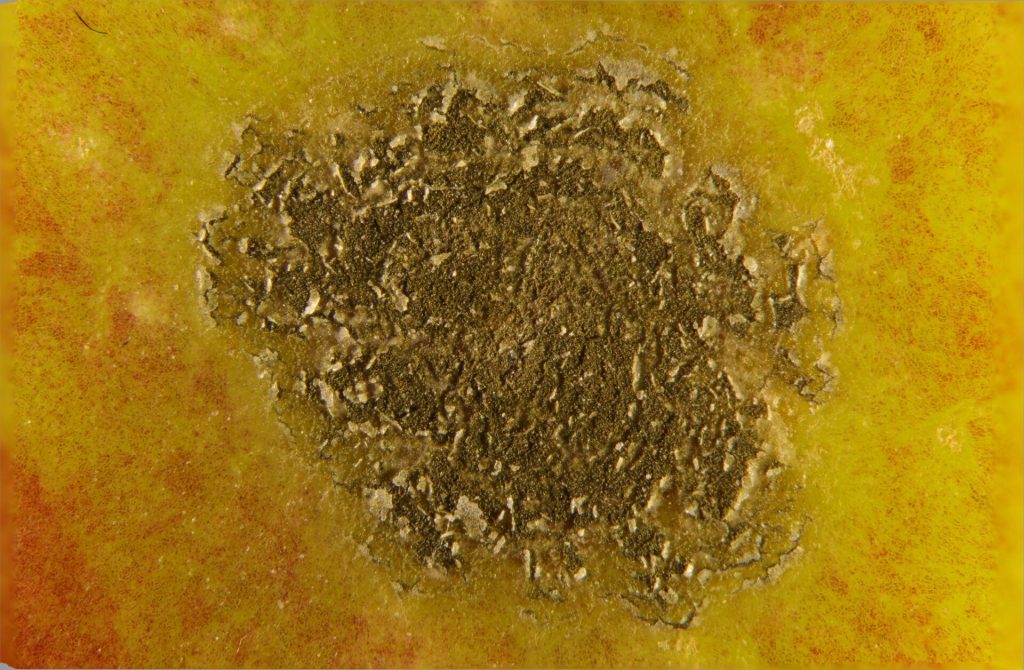
Apple scab is one of the most common diseases affecting apple trees in the UK.
It is caused by the fungus Venturia inaequalis and can affect both the leaves and developing fruit.
What Does Apple Scab Look Like?
The first symptoms are often olive green patches on the leaves.
These may gradually darken to brown or almost black as the infection develops. Heavily affected leaves can become distorted and may fall from the tree earlier than normal.
On the fruit, apple scab produces rough brown or black patches.
As an apple continues to expand, badly affected skin may crack. Fruit can also become distorted where infection occurs while the apple is still young.
Is an Apple With Scab Safe to Eat?
Apple scab normally affects the skin rather than making the entire fruit unusable.
Lightly affected apples can usually still be eaten after damaged areas are removed.
The bigger problem is storage.
Cracks and damaged skin provide entry points for other organisms, so badly affected apples generally do not store as well as clean, undamaged fruit.
How to Reduce Apple Scab
Remove badly infected fallen leaves and fruit where practical.
Good pruning can also improve airflow through the canopy, helping foliage dry more quickly after rain.
Avoid creating an excessively dense canopy and keep the tree generally healthy.
Where apple scab is a persistent problem, choosing cultivars with better natural resistance can also help.
Brown Rot on Apples
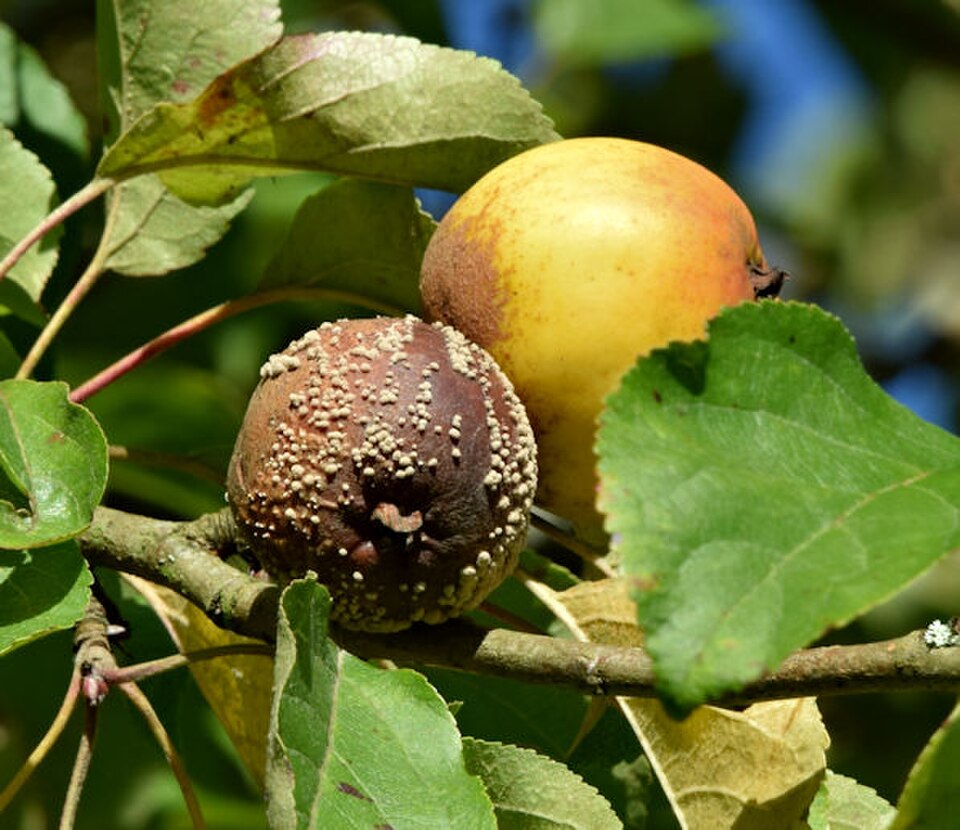
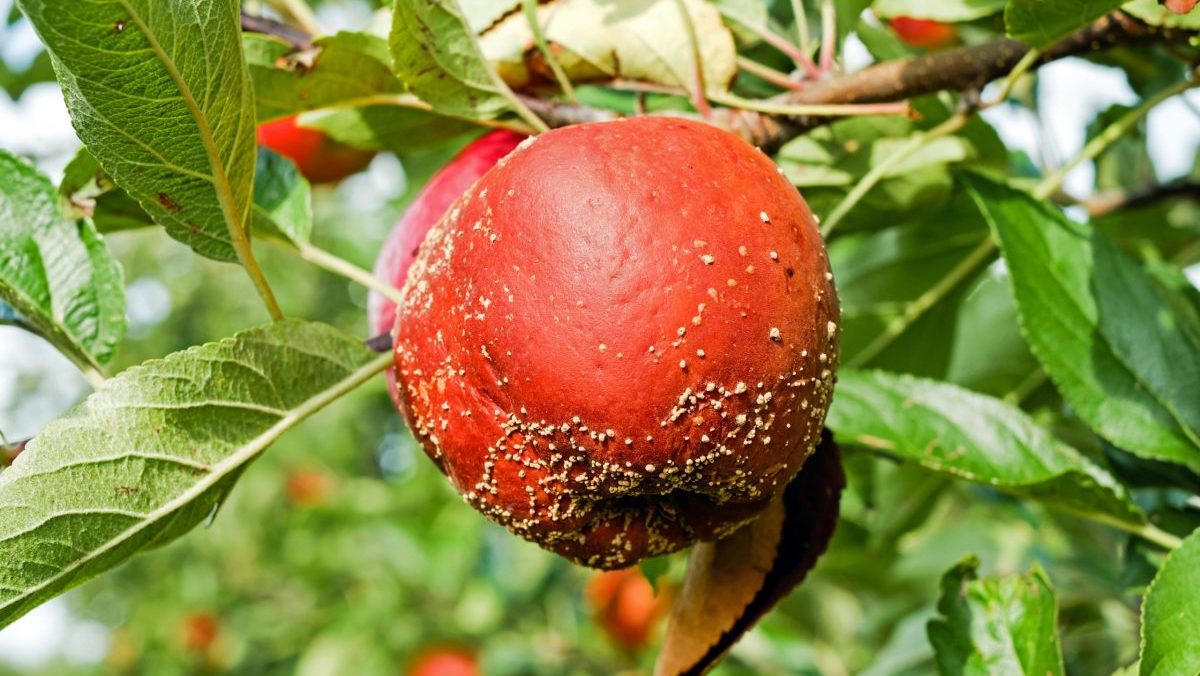
Brown rot is one of the most obvious fruit problems towards the end of summer and into autumn.
The first sign is usually a soft brown patch on the apple.
This patch expands and can eventually cover most or all of the fruit.
As the rot develops, small pale brown or beige raised spots often appear over the affected area. These may form rough circular patterns.
Eventually, infected apples can shrivel and dry into hard mummified fruit that remains hanging on the tree.
Why Do Apples Get Brown Rot?
The fungus often enters through damaged skin.
Bird pecks, insect feeding, cracking and apple scab can all create small wounds that allow infection to develop.
Rot can also spread between fruits that are touching one another.
What Should You Do With Rotten Apples?
Remove badly affected fruit rather than leaving it hanging on the tree.
Mummified fruit can remain a source of infection.
Regularly checking the tree as the crop ripens makes it easier to remove infected apples before the problem spreads to neighbouring fruit.
Apple Canker
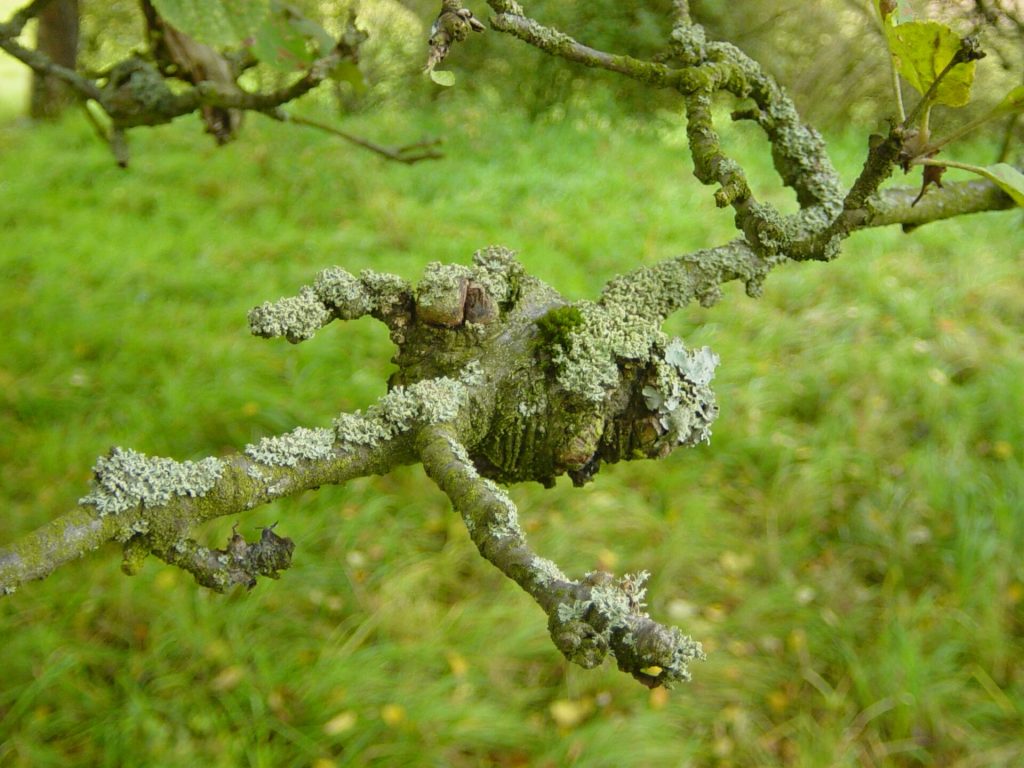
Apple canker affects the woody parts of the tree rather than simply the leaves or fruit.
It is caused by a fungus and is particularly common where trees are growing in damp conditions.
What Does Apple Canker Look Like?
Look for areas of bark that appear sunken, cracked or dead.
The affected area may gradually expand, with a noticeable boundary between healthy bark and damaged tissue.
On smaller shoots and branches, a canker can eventually grow around the entire stem.
When this happens, everything beyond the infected area may die back.
Cankers frequently develop around wounds, old pruning cuts, buds and damaged areas of bark.
What to Do About Apple Canker
Small infected shoots can often be pruned out.
Make cuts well below the visibly damaged area and into healthy wood.
Larger cankers on important branches require more judgement because removing them may mean losing a substantial part of the tree.
Keep pruning tools clean and avoid pruning when conditions are persistently wet where possible.
Apple Powdery Mildew
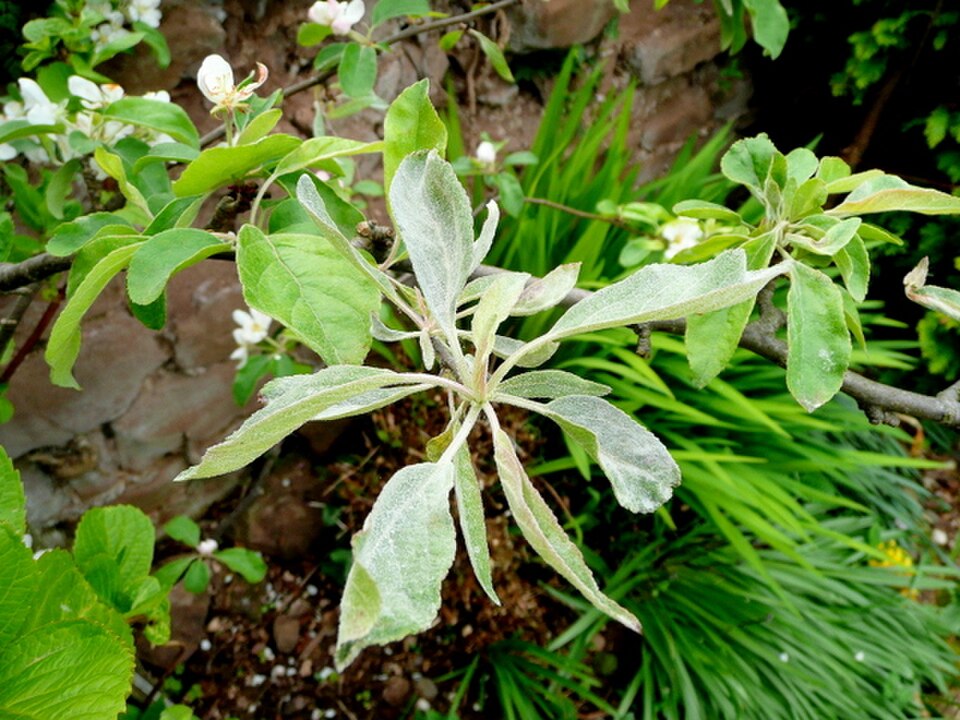
Apple powdery mildew is usually quite easy to recognise once you know what to look for.
Young leaves, shoots and sometimes flower clusters develop a white or grey powdery coating.
Affected leaves may become narrow, curled or distorted.
Young shoots can also remain weak and fail to develop normally.
Powdery Mildew or Woolly Aphid?
These two problems can initially be confused because both can produce something white on an apple tree.
The location provides an important clue.
White powder spread over young leaves and shoots is more likely to be powdery mildew.
White fluffy or cotton wool like material concentrated on woody branches and bark is more likely to be woolly aphid.
Aphids and Curled Apple Leaves
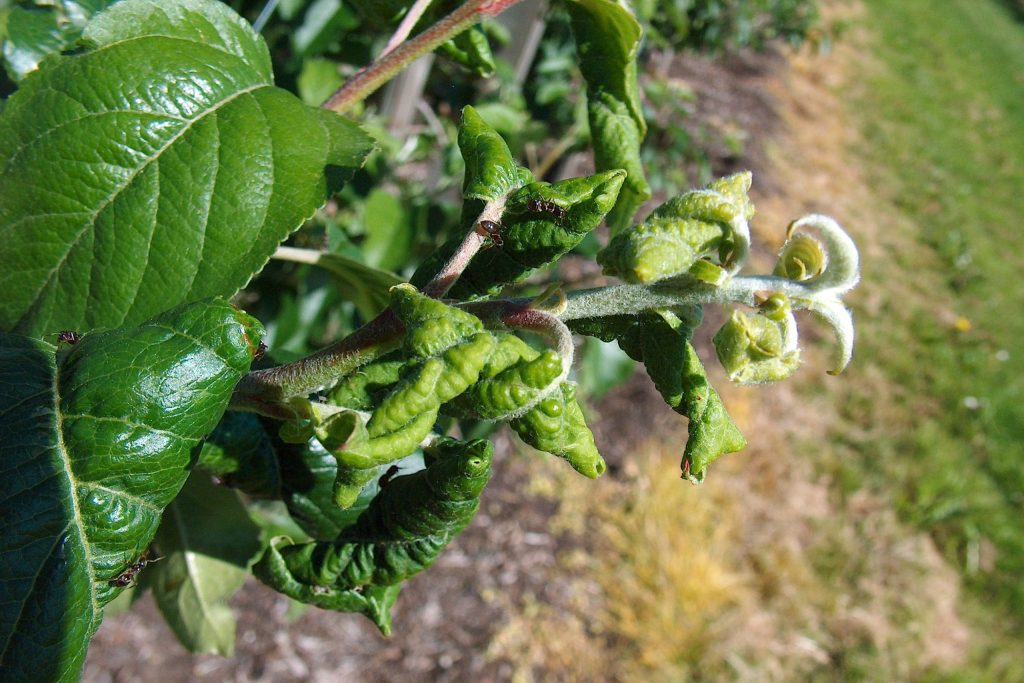
Curled leaves are one of the most common reasons gardeners become concerned about apple trees.
Aphids are frequently responsible, particularly when the newest leaves and shoots are affected.
The insects feed by sucking sap from young growth.
This causes leaves to curl and distort, sometimes tightly enough that the aphids become hidden inside them.
You may also notice a sticky coating on the leaves.
This is honeydew produced by the aphids.
Black sooty mould can subsequently grow on the honeydew, making the problem look worse than it actually is.
Are Curled Apple Leaves Always Caused by Aphids?
No.
Curled or distorted leaves can have several causes.
Powdery mildew, drought stress, herbicide damage and other problems can sometimes produce similar symptoms.
Before treating the tree, open a few curled leaves and look carefully for aphids or other insects.
Woolly Aphid
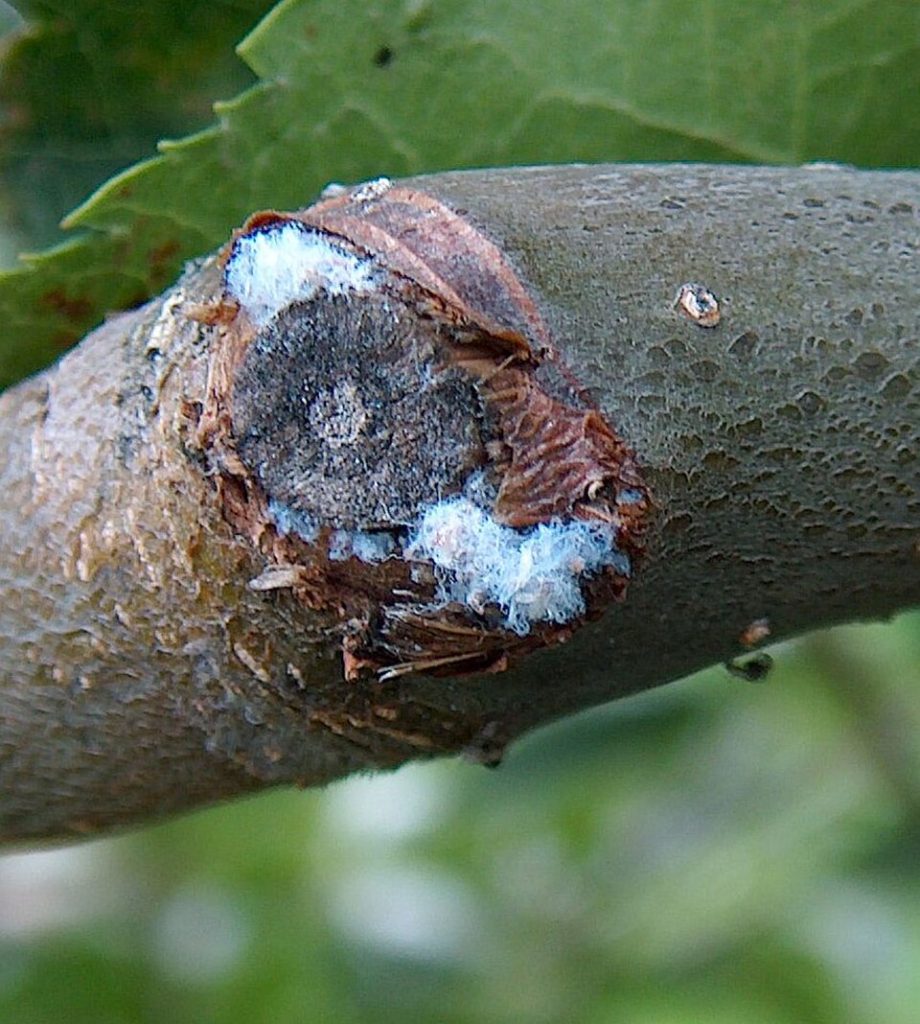
White fluffy patches on the branches of an apple tree are often caused by woolly aphids.
The insects cover themselves in a distinctive white waxy material which can make the colony look like a patch of cotton wool or mould.
Woolly aphids tend to gather on woody parts of the tree.
They are particularly common around wounds, old pruning cuts and rough areas of bark.
Heavy infestations can cause swollen or distorted growth.
Woolly Aphid or Mildew?
White coating on young leaves and shoots:
Check for powdery mildew.
White fluffy patches concentrated on branches:
Check for woolly aphid.
Codling Moth
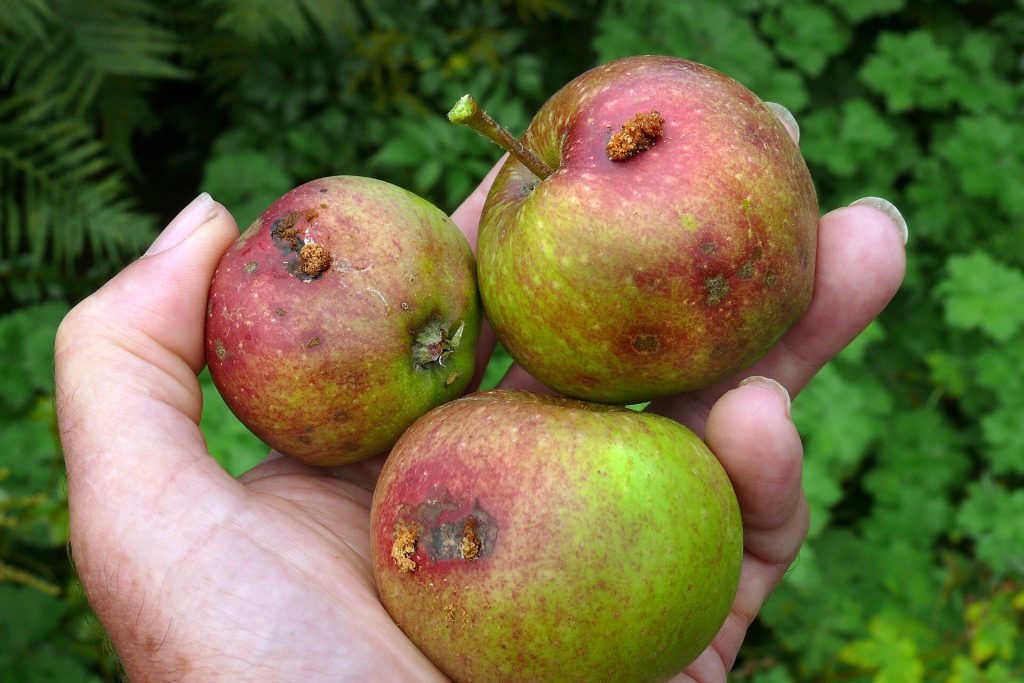
Codling moth is one of the most familiar apple pests, even if many gardeners do not immediately recognise the name.
It is often responsible when you cut into an apple and find a tunnel, damaged flesh or what appears to be a maggot inside.
The culprit is actually the caterpillar of a moth.
The caterpillar enters the fruit and feeds inside, often working its way towards the core.
What Does Codling Moth Damage Look Like?
Look for a small hole in the apple, sometimes surrounded by brown crumbly material.
Inside the fruit there may be a tunnel running towards the core.
Damaged fruit may ripen or fall earlier than expected.
A small amount of codling moth damage does not necessarily mean that the entire tree will be affected.
Apple Sawfly
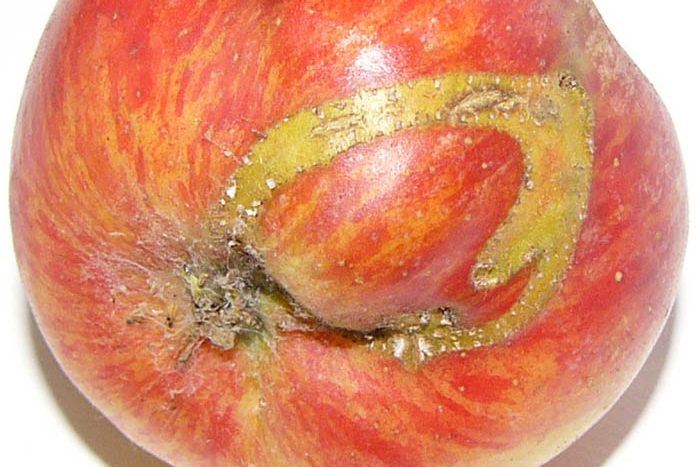
Apple sawfly damage can sometimes be confused with codling moth.
One useful clue is timing.
Fruit damaged by apple sawfly often falls when still small, commonly during early summer.
The larvae may move between several young fruits.
Another particularly distinctive symptom is a long, ribbon shaped scar running across the skin of an apple.
This happens when a young sawfly larva feeds just beneath the surface while the fruit is still small.
As the apple grows, the damaged area stretches into a curved scar.
These scarred apples may continue developing and can often still be eaten.
Bitter Pit
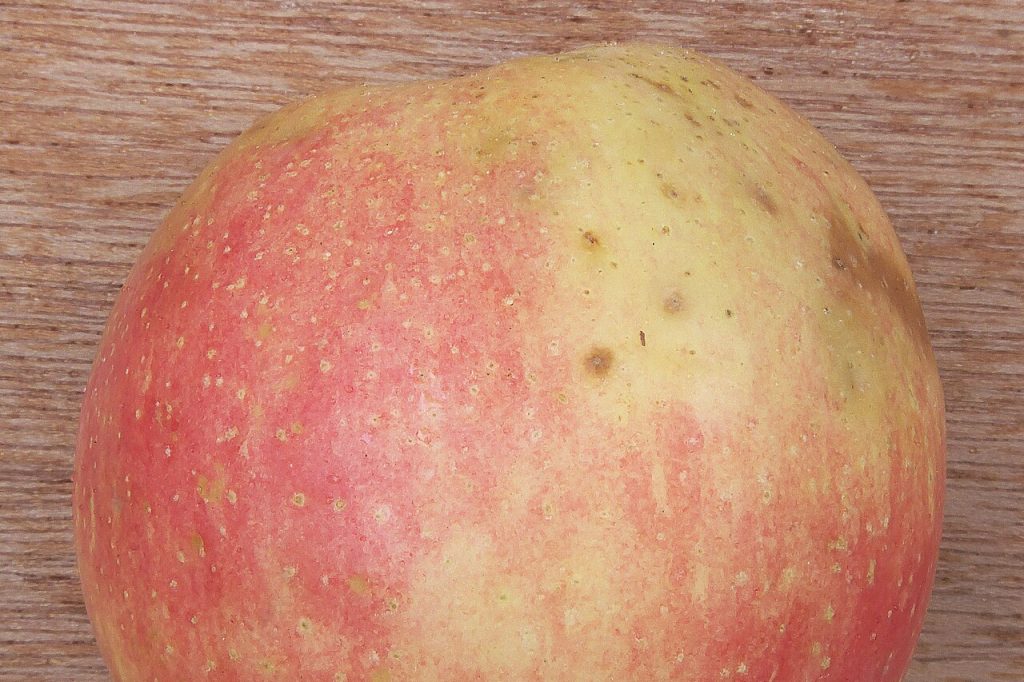
Bitter pit is often mistaken for a disease, but it is actually a physiological disorder.
Affected apples develop small dark, sunken spots on the skin.
If the fruit is cut open, dry brown or corky areas may be visible beneath these spots.
Why Does Bitter Pit Happen?
Bitter pit is associated with insufficient calcium reaching the developing fruit.
This does not necessarily mean that the soil itself lacks calcium.
Rapid growth, irregular watering and the balance of nutrients within the tree can all influence calcium movement into the fruit.
Some varieties are naturally more susceptible than others.
Symptoms can also become more obvious after apples have been placed into storage.
How to Reduce Bitter Pit
Try to avoid extreme fluctuations between very dry and very wet conditions.
Mulching around the root zone can help maintain more even soil moisture.
Avoid excessive nitrogen feeding, which can encourage very vigorous growth at the expense of fruit quality.
Silver Leaf
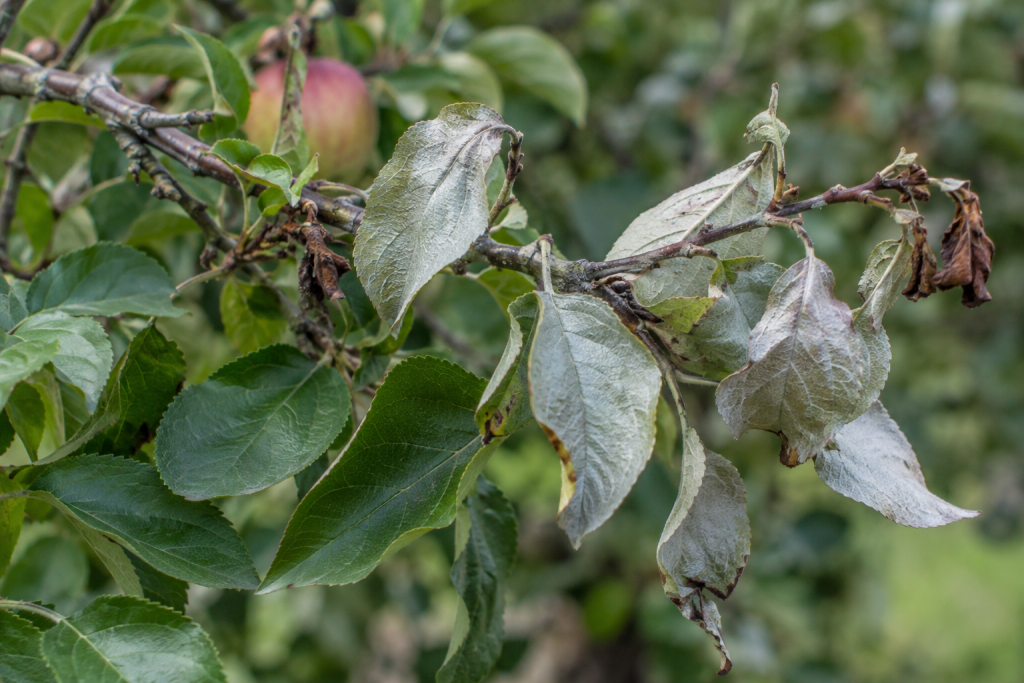
Silver leaf gets its name from the silvery appearance that can develop across affected foliage.
It often appears on individual branches rather than affecting the entire tree evenly.
Branches may eventually show signs of dieback.
Not every silvery leaf means the tree has silver leaf disease.
Physical damage, stress and other problems can sometimes alter the appearance of foliage, so it is worth checking the overall pattern before making a diagnosis.
If one branch shows distinctly silver foliage combined with dieback, silver leaf should be considered.
Blossom Wilt
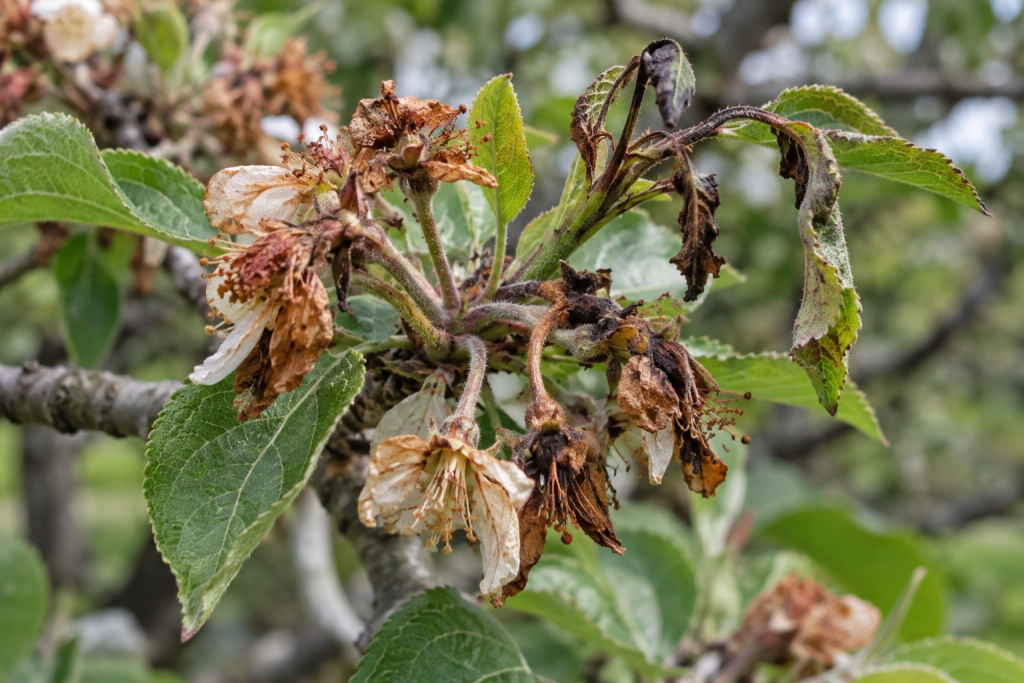
Blossom wilt can cause flowers and nearby young shoots to suddenly turn brown and die.
Affected blossom may remain attached to the tree.
The infection can sometimes extend into nearby shoots and create small areas of dieback.
Removing affected shoots can help reduce the amount of infected material remaining on the tree.
Fireblight
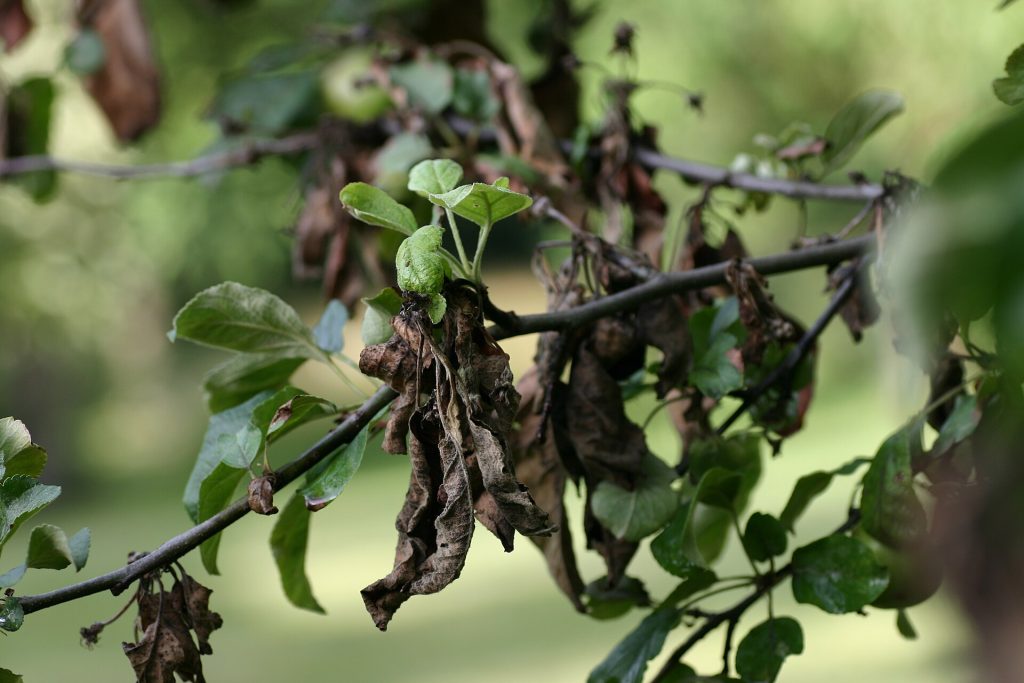
Fireblight can produce dramatic shoot dieback and blackened growth.
Young shoots may wilt at the tips, sometimes creating a distinctive hooked appearance.
However, fireblight is much less common on apples than many everyday problems such as scab, mildew and aphids.
Do not assume that every blackened shoot is fireblight.
Frost damage, blossom wilt and other causes of dieback can look similar at first.
Apple Tree Problems That Are Not Pests or Diseases
Not every unusual looking apple tree is suffering from a pest or disease.
Several environmental and growing problems can produce very similar symptoms.
Frost Damage
Late frost can damage blossom and young developing fruit.
Flowers may turn brown or black and fail to set fruit.
If damage appears suddenly after a cold night, frost is worth considering before assuming disease.
Drought Stress
Apple trees under severe water stress may develop curled or drooping foliage.
Young fruit can also stop developing properly or drop prematurely.
Recently planted trees are especially vulnerable because their root systems have not yet spread far into the surrounding soil.
Waterlogging
Apple trees need moisture, but roots also require oxygen.
Soil that remains saturated for long periods can damage roots and weaken the entire tree.
Symptoms may include yellow foliage, poor growth and general decline.
Fruit Cracking
Apples can occasionally crack after a prolonged dry period followed by heavy rain.
The fruit suddenly absorbs more water and expands faster than the skin can accommodate.
Cracked apples are then much more vulnerable to secondary rots.
Poor Pollination
Poor fruit set does not automatically mean the tree is diseased.
Cold, wet or windy conditions during flowering can reduce insect activity.
Some apple cultivars also require a compatible pollination partner nearby to produce a reliable crop.
Bird Damage
Birds can peck ripening apples and leave small wounds.
The original damage may be relatively minor, but damaged skin creates an entry point for brown rot and other secondary problems.
Normal Russeting
Rough brown skin on an apple is not always a problem.
Some cultivars naturally develop russeting, particularly around the stalk.
If the skin is firm and corky rather than soft and rotten, and the variety is known for russeting, the fruit may be perfectly normal.
Can You Eat Apples From a Diseased Tree?
It depends on the problem and the condition of the fruit.
Apples with light superficial scab are generally still usable once damaged areas have been removed.
Fruit with minor cosmetic insect damage may also be usable if the remaining flesh is healthy.
Rotten, badly damaged or heavily infested apples should not be stored alongside sound fruit.
Storage apples should ideally be free from cuts, bruises and signs of rot.
One damaged apple can deteriorate quickly and encourage neighbouring fruit to spoil.
How to Keep Apple Trees Healthy
There is no way to prevent every apple tree problem, but good growing conditions make many pests and diseases easier to manage.
Prune Appropriately
An open canopy allows more light and air to move through the tree.
This helps foliage dry after rainfall and makes it easier to inspect fruit and branches.
Not sure where to start? Read our guide to pruning apple trees for advice on keeping trees productive, well shaped and easier to manage.
Remove Rotten and Mummified Fruit
Do not leave obviously rotten fruit hanging on the tree throughout winter.
Removing infected material helps reduce potential sources of disease.
Check the Tree Regularly
Problems are much easier to identify when they are caught early.
Look at new growth, developing fruit and branch junctions whenever you are working around the tree.
Maintain Even Soil Moisture
Established apple trees are relatively resilient, but prolonged drought can place them under considerable stress.
Young and recently planted trees need particular attention during dry spells.
Avoid Unnecessary Bark Damage
Damage from tools, ties, rubbing branches or machinery can provide entry points for disease.
Check tree ties regularly and remove crossing or damaged branches where appropriate.
Do Not Overfeed
Excessive feeding, particularly with nitrogen, can encourage lush soft growth.
Balanced growth is generally preferable to forcing a tree to produce long, weak shoots.
Choose Appropriate Varieties
Some apple cultivars are naturally more resistant to particular diseases than others.
If scab or another disease repeatedly causes severe problems in your garden, disease resistance is worth considering when planting future trees.
When Should You Worry About an Apple Tree Problem?
A few marked leaves or damaged apples rarely mean that an entire tree is in danger.
Apple trees support a huge range of insects and will usually tolerate minor pest damage without difficulty.
Pay more attention when:
- Large sections of the canopy are dying back.
- A problem is spreading rapidly.
- Major branches have areas of dead or sunken bark.
- The tree is losing large numbers of leaves unusually early.
- Most of the fruit is affected.
- The problem returns severely every year.
- The tree shows a combination of poor growth, dieback and declining health.
The aim should not be to maintain a completely blemish free tree.
Instead, identify the problem accurately, decide whether it is actually causing meaningful harm and only intervene where necessary.
Final Thoughts
Apple trees can show an intimidating range of symptoms, but most problems become much easier to identify once you concentrate on which part of the tree is affected.
Start by asking a few simple questions.
Is the problem on the leaves, fruit, blossom or branches?
Is there evidence of an insect?
Is the affected tissue soft and rotten, dry and dead, or simply discoloured?
Did the problem develop suddenly or gradually?
Is the whole tree affected or only a single shoot or branch?
These observations can quickly narrow down the possibilities.
In many cases the problem will be something relatively common such as apple scab, aphids, powdery mildew or minor insect damage rather than a serious threat to the tree.
Correct identification should always come before treatment.
GHUK content is written for UK growing conditions and informed by hands-on professional gardening experience. It is designed to be practical, clear and useful in real gardens.