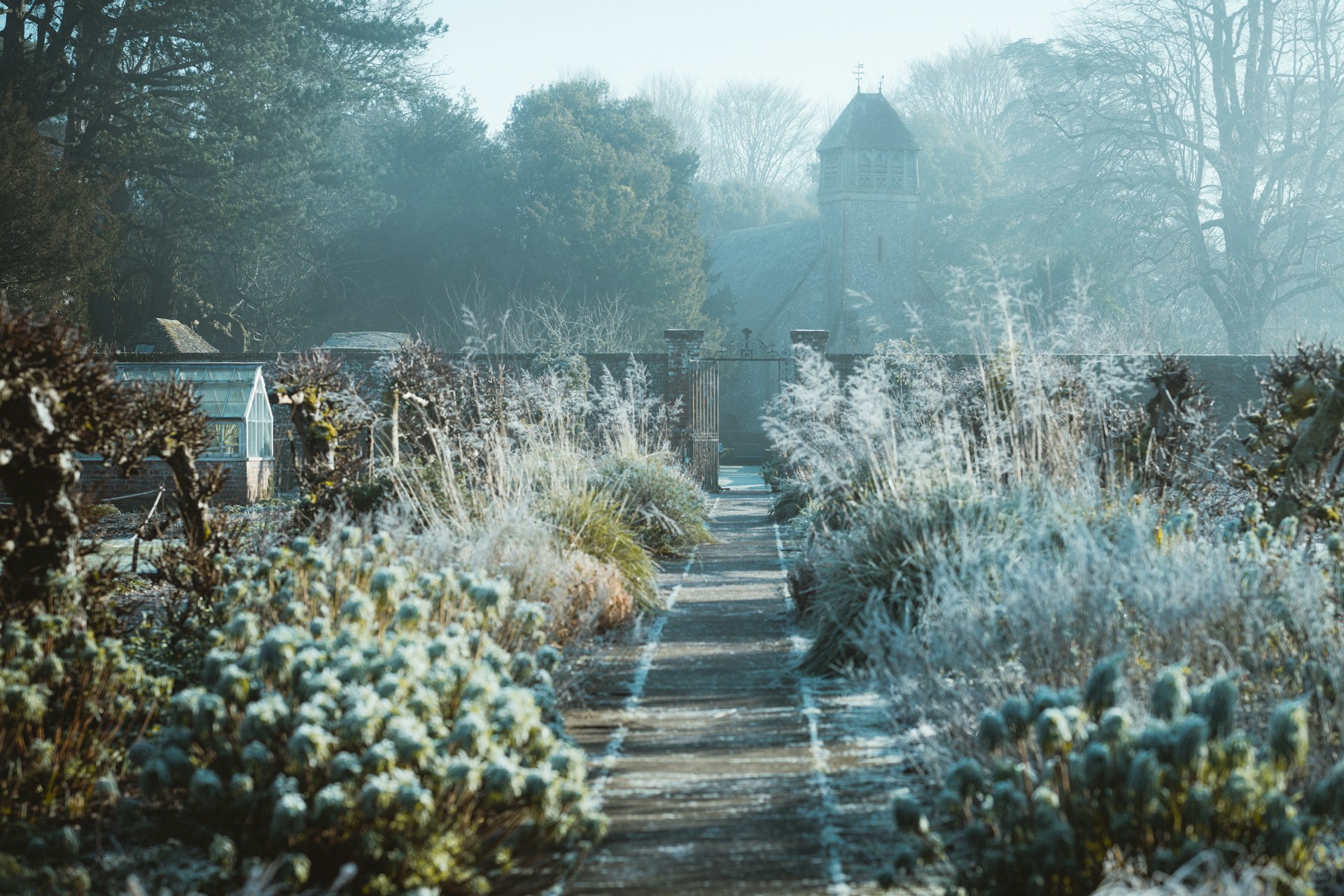
Dahlias can still be flowering when the rest of the garden is winding down. The question is what to do when that display ends: dig up the tubers, move the pots indoors, or leave everything where it is?
Lifting and storing is usually the safer choice in cold gardens or soil that stays wet through winter. Leaving dahlias in the ground can work in milder, sheltered gardens with good drainage, provided you add winter protection and accept that losses are possible.[1]
Choose according to the conditions around the roots and the storage you can provide. A neighbour’s success is useful local evidence, but your own low, wet border may behave very differently.
Should you lift dahlias or leave them in the ground?
| Your situation | Best starting point |
|---|---|
| Cold, exposed garden or a regular frost pocket | Plan to lift and find a reliably frost free storage space. |
| Heavy soil that remains wet in winter | Favour lifting. Insulation on top will not solve poor drainage below. |
| Mild, sheltered position with freely draining soil | Leaving tubers under a protective mulch is an option, with some risk. |
| Dahlias in containers | Move dormant pots somewhere frost free, or lift the tubers if space is limited. |
| No suitable indoor storage | Resolve this before lifting; an unheated outbuilding may still freeze. |
Decision table informed by UK cultivation guidance and container advice.[7][6]
If you have several plants, you can lift the ones you most want to keep and trial leaving others outside. Record what you do so next autumn’s decision is based on your garden’s results.
Unsure about your ground? Our guide to soil texture and the differences between sand, silt and clay is a useful starting point.
When to lift dahlias in the UK
The usual cue is the first frost that blackens and collapses the foliage. This marks the end of the display, but does not mean the buried tubers have necessarily frozen.[3]
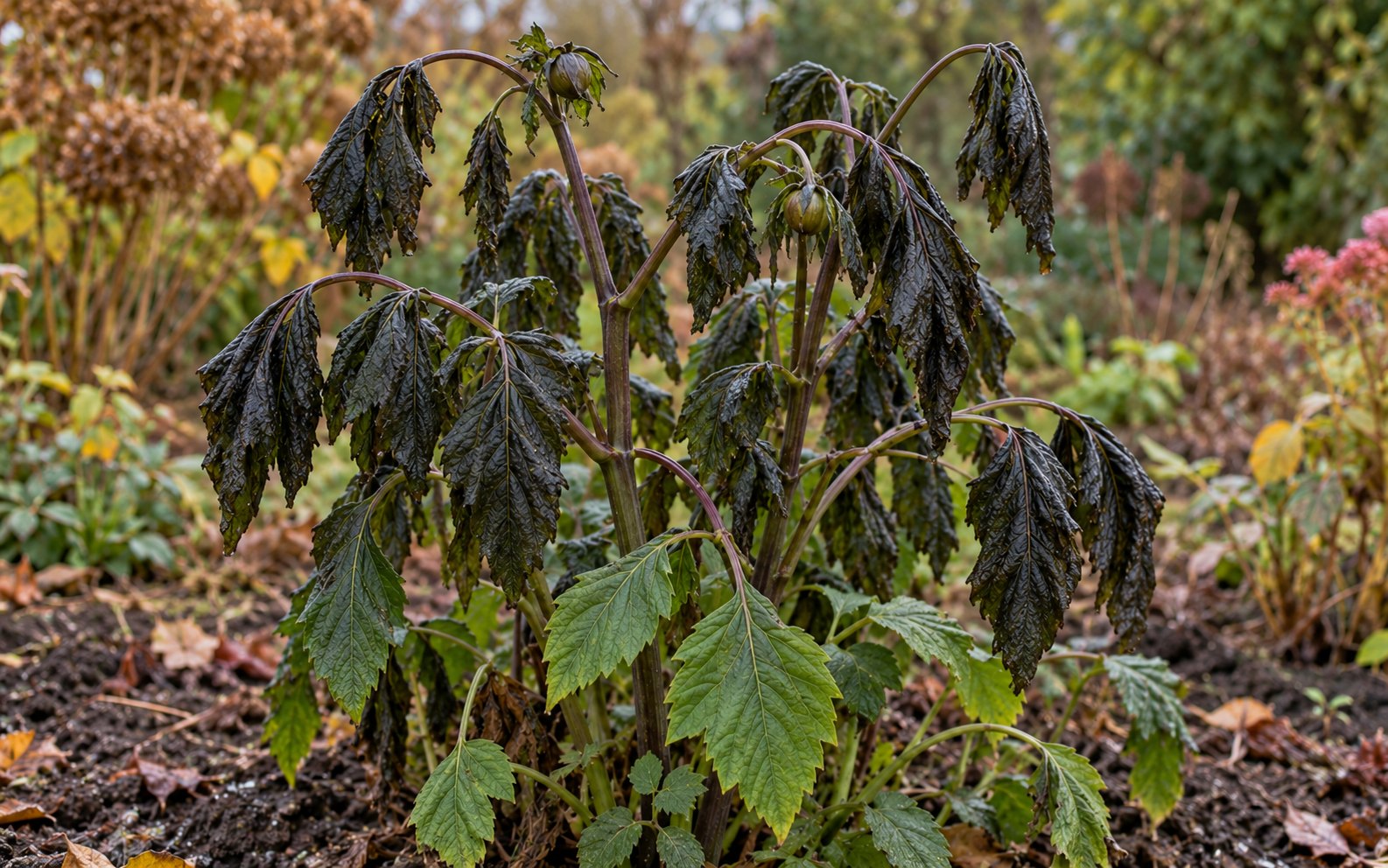
Do not wait indefinitely for frost. The RHS advises lifting by late November even if frosts are late.[1] If severe cold or prolonged waterlogging threatens earlier, protect your plants rather than waiting for a textbook appearance.
Choose a workable day when the ground is not frozen. Have labels, boxes and a drying space ready first. Our guide to cold weather, snow and frost explains why conditions vary within the same garden.
How to lift dahlia tubers without damaging them
Keep the variety label with the plant throughout the job. If you do not know its name, a description such as “tall red by the gate” is better than an unmarked box.
Protect the crown and tuber necks
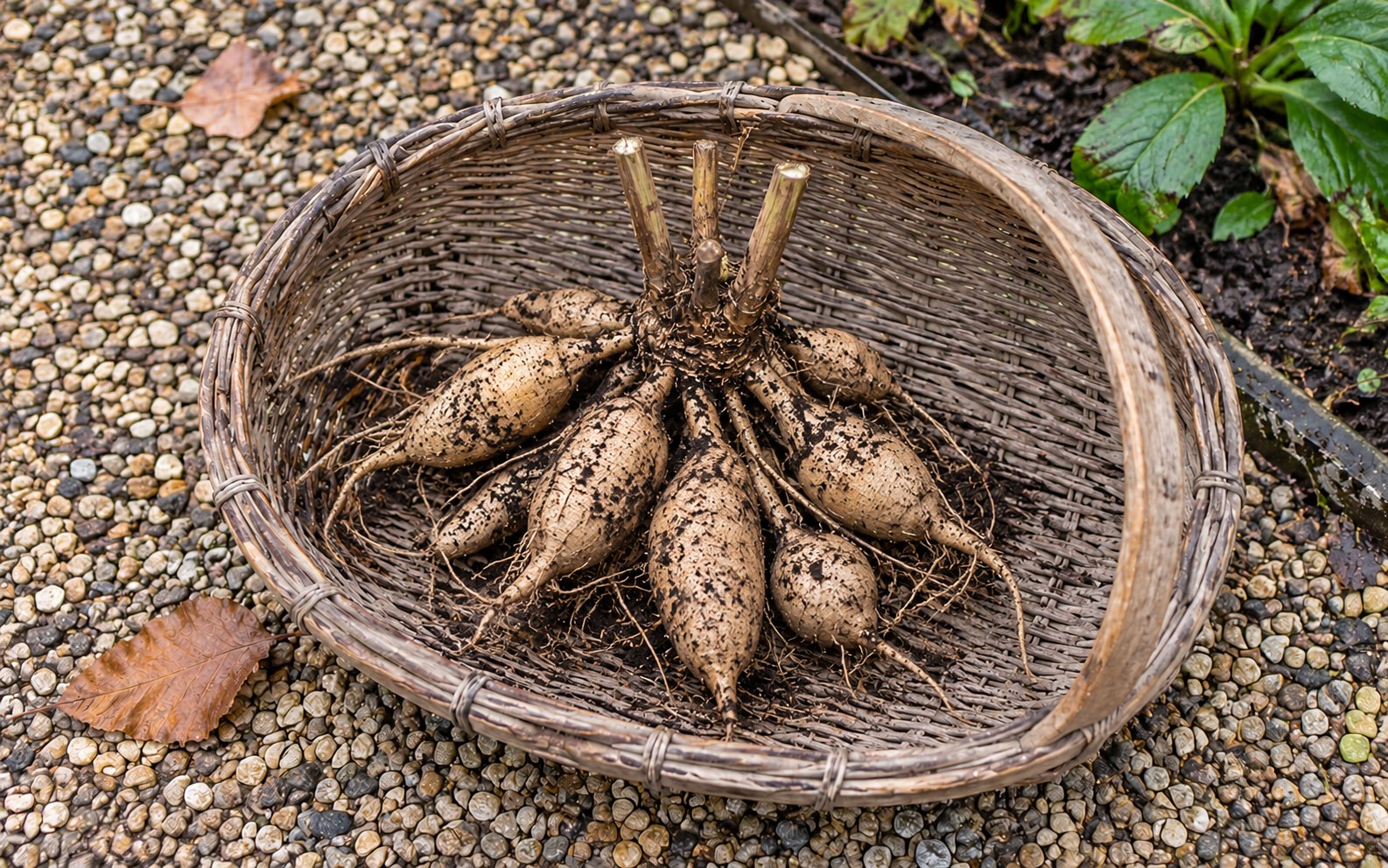
The crown is the area around the base of the old stems where next year’s buds form. The narrow neck connects each swollen tuber to it. A tuber is a food store; without a viable piece of crown and an intact connection, it cannot make a new plant.[5]
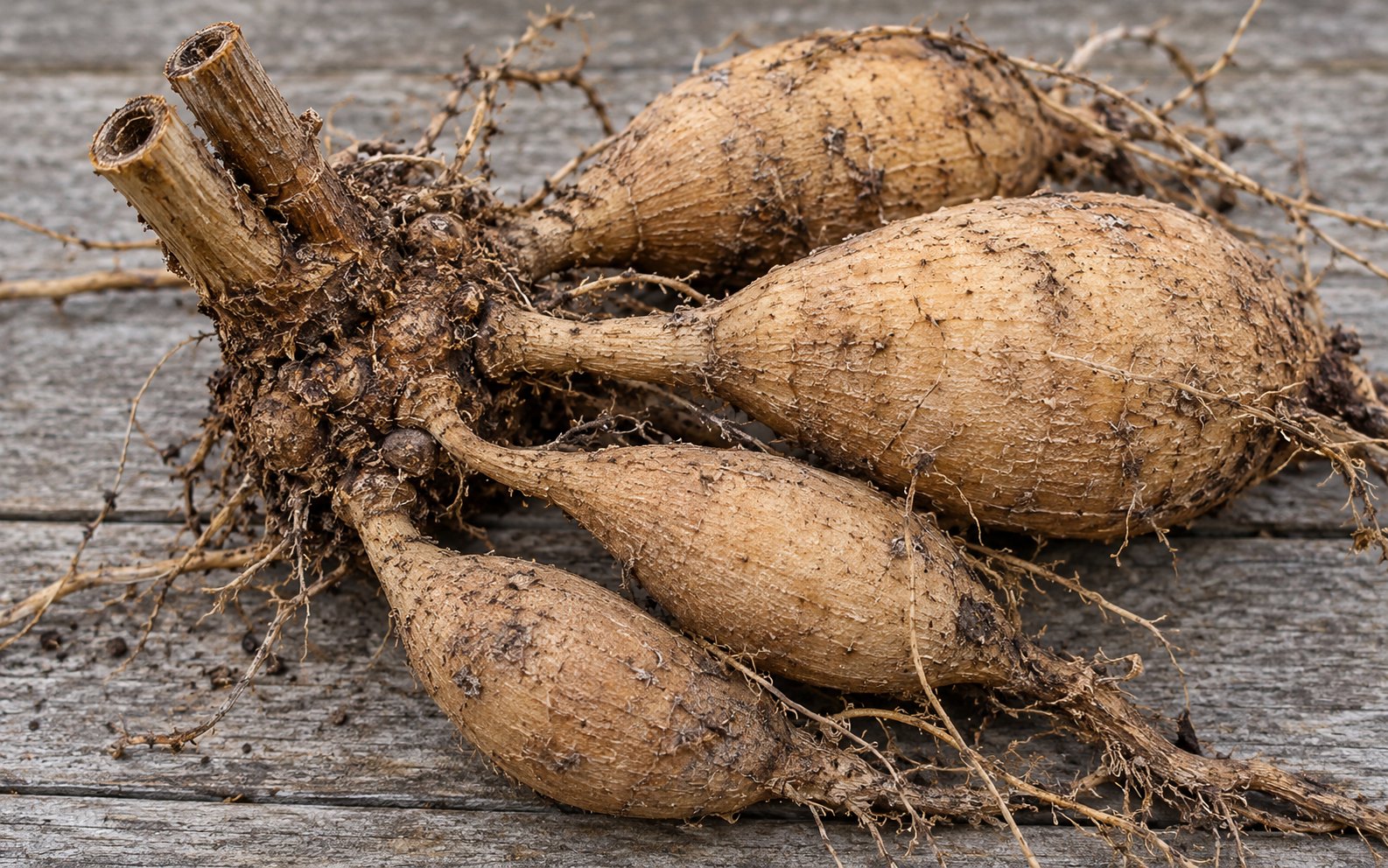
Small cracks are easily made while trying to remove every last bit of soil. Aim for careful handling rather than a spotless clump.
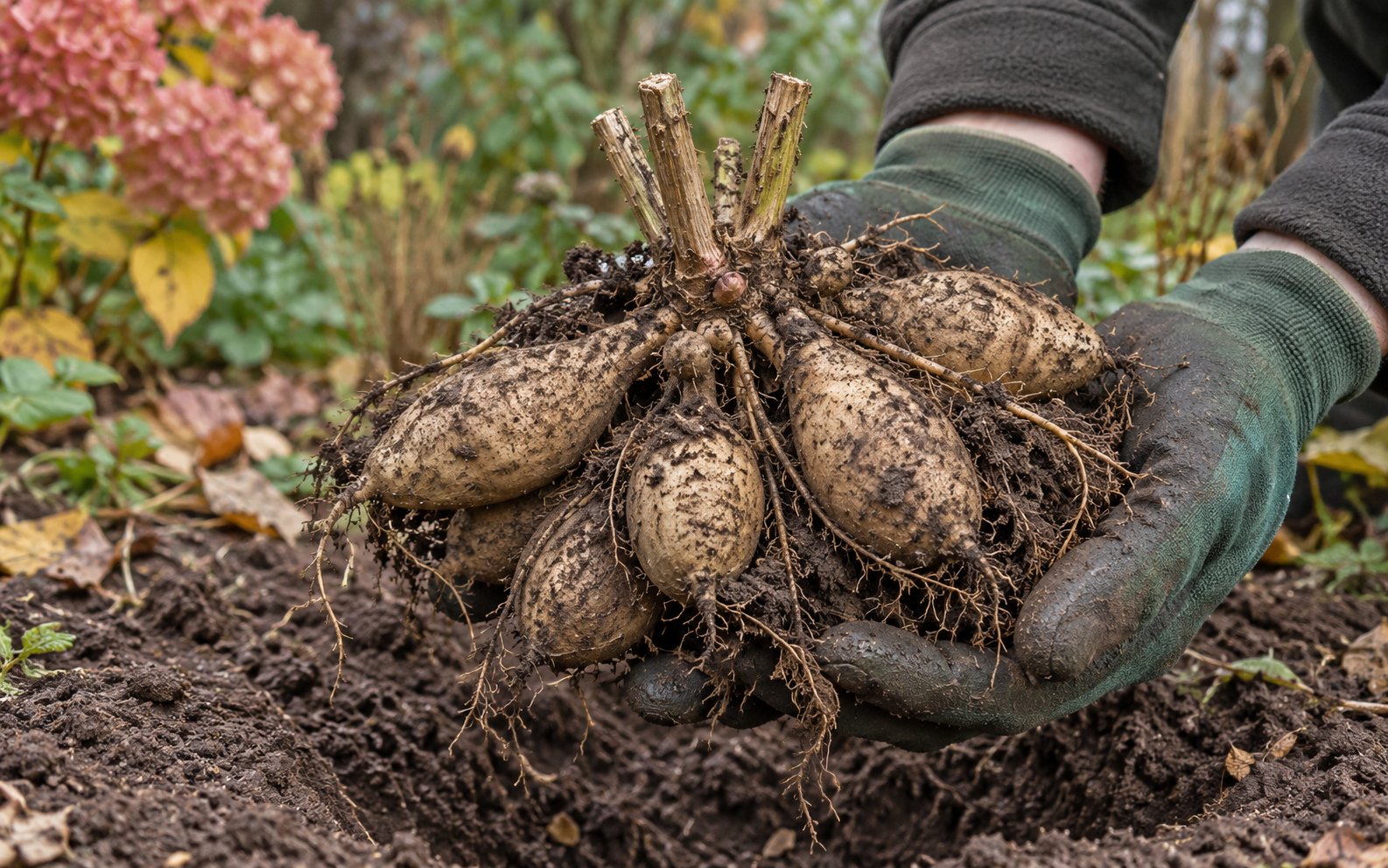
- Cut back the top growth. Leave about 10 to 15cm of stem above the crown so the centre remains easy to identify.[1]
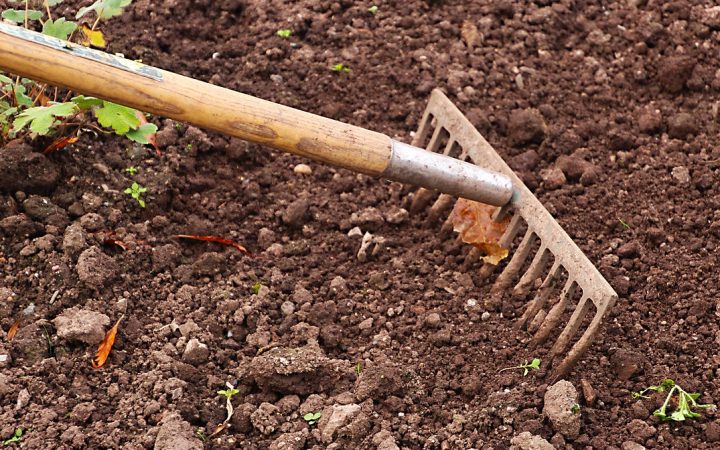
- Loosen the surrounding soil. Start well outside the stem and work around the plant. Mature clumps can extend further than expected, so move outwards if you meet a tuber.
- Lift from underneath. Slide the fork beneath the loosened root mass and support it as it comes free. Do not pull the plant out by its remaining stems.
- Set the clump down gently. Remove loose soil with your fingers, taking care around the narrow connections between tubers and crown.[4]
How to dry and store dahlia tubers
Dry the surface before packing
Remove remaining foliage and obvious damaged material, then stand the clumps upside down in a cool, airy, frost free place so moisture can drain from the hollow stems. Keep them sheltered from rain.[2]
Drying time depends on the size of the clump, how wet it was and the air conditions. Cool, damp clumps may need a couple of weeks; inspect smaller ones sooner. The aim is a dry surface and drained stems while the tubers remain firm, not prolonged drying until they become wrinkled.[6]
Pack intact clumps
Use a shallow crate or open topped box. Surround the dried tubers with dry spent potting compost or vermiculite, keeping each variety labelled and accessible for inspection. Avoid packing damp clumps tightly together.[2][7]
For a straightforward first attempt, leave healthy clumps intact through winter. Spring division is easier to judge once buds begin to show, and avoids making extra storage wounds now.[1]
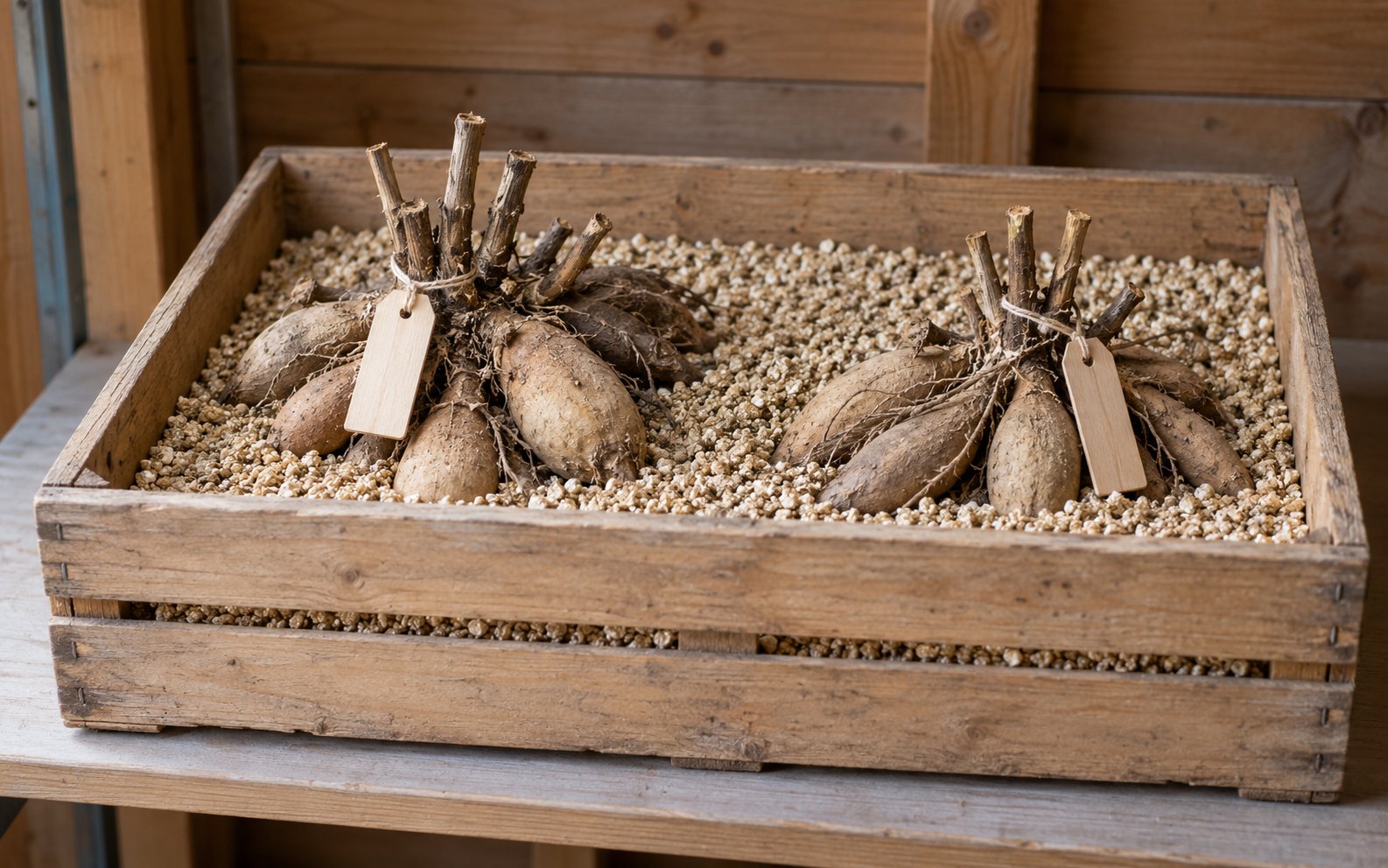
Choose somewhere cool that will stay frost free
A cool storage space at roughly 4 to 7°C is a useful target. Avoid warm rooms, radiators and places with large temperature swings. Too much warmth encourages premature growth and moisture loss.[8]
A garage, cellar or outbuilding may work, but check the actual overnight temperature with a minimum and maximum thermometer. Have a safer location ready if cold weather threatens. Fleece or newspaper adds insulation; it cannot guarantee protection through prolonged freezing.
How to leave dahlias in the ground over winter
Choose this route where winters are relatively mild and water drains away readily. A garden where dahlias survived last year is encouraging, but a colder or wetter winter can still cause losses.
- Once frost ends the display, cut down the dead top growth.
- Mark the crown with a clear label.
- Cover the crown area with around 15cm of insulating mulch, such as garden compost or bark chippings.[1]
- Check that protection remains in place after wind and disturbance.
This is deliberate winter protection over a dormant crown. It differs from routine summer mulching around growing stems. It also does not make saturated soil safe: if water collects around the plant, lifting is the more dependable choice.
In spring, ease back the thick covering as conditions improve and growth resumes, watching for frost forecasts before exposing new shoots.[6]
How to overwinter dahlias in pots
You can keep dormant dahlias in their existing pots instead of lifting every clump. Cut back the finished growth, bring the containers into a cool, frost free space and let the compost dry down. Do not continue a summer watering routine.[6]
Check the pots periodically. Dormant plants use little water, but storage conditions still matter. Warm, very dry surroundings can dehydrate tubers; wet compost in a cold pot encourages trouble.
If containers are too heavy or take up too much room, lift and store their tubers using the method above. Keeping a pot against a house wall outdoors is a less secure option than moving it somewhere that genuinely stays above freezing.
For pots remaining outside in a mild, sheltered position, remove saucers and keep drainage holes clear. Pot feet help prevent containers sitting in water, but do not make them frost proof.[3]
Check stored tubers through winter
Look through stored clumps about once a month, and check their location during severe cold. A brief inspection is easier than discovering a whole box has deteriorated in spring.[8]
- Soft or rotting tissue: remove affected material from the box promptly. If the crown is rotten, discard the clump. Clean tools before using them on healthy stock.[4]
- Damp packing or condensation: improve ventilation and replace wet packing. Check that rain or drips are not reaching the box.
- Progressive shrivelling: check for excess warmth or very dry air. If necessary, barely moisten the packing material, avoiding a soaking of the tubers, then inspect again soon.[5]
- Cold exposure: move the box before its contents freeze. Do not rely solely on the afternoon temperature.
Different varieties do not all store equally well. Keep notes on the packing and location you used, especially if one variety repeatedly shrivels while the others remain sound.[7]
Starting dahlias again in spring
In March or April, you can pot up sound tubers and restart growth under cover if you have suitable space. Once shoots appear, provide good light and introduce water carefully.[6]
Keep young growth protected and harden plants off before planting outside after local frost risk has passed. Starting early is only useful if you can accommodate the plants until the garden is ready for them.
Common questions about overwintering dahlias
Can I lift dahlias before the first frost?
Yes, if circumstances require it, although leaving healthy foliage longer lets the plant continue growing. Do not wait for frost if worsening conditions put the clump at risk. Lifting ends the display, so prepare the storage space first.[5]
Should I wash dahlia tubers?
Successful methods differ. For the intact clump method here, gently remove loose soil rather than routinely washing. Growers who rinse their tubers must dry them properly afterwards. Washing is not compulsory, and a little remaining soil is preferable to damage caused by aggressive cleaning.[2][4]
Can I divide the clumps in autumn?
Experienced growers do, but it is optional. If you are unsure where the buds are, store intact clumps and divide in spring. Each new division needs a viable bud on crown tissue.[8]
Will a broken tuber grow?
A detached swollen tuber without viable crown tissue will not. A piece may grow only if it retains a live bud and an intact connection to its food store. Losing one tuber does not necessarily ruin the rest of the clump.[5]
Is an unheated greenhouse suitable?
Only if the storage position remains frost free. Glass provides shelter from rain, but does not guarantee safe temperatures overnight. Measure the minimum temperature and move the tubers if necessary.
Sources and further reading
- RHS: How to grow dahlias
- RHS: Overwintering tender plants, lifting or mulching
- RHS: October jobs for flowers
- University of Minnesota Extension: Planting bulbs, tubers and rhizomes
- American Dahlia Society: Processing tubers pictorial guide (PDF)
- Sarah Raven: How to plant, grow and care for dahlias
- National Dahlia Society: Dahlia cultivation
- American Dahlia Society: Digging, dividing and storing tubers
Sources checked 18 October 2026. UK timing and outdoor overwintering advice follow UK guidance. Overseas sources support handling, anatomy and storage principles.
GHUK content is written for UK growing conditions and informed by hands-on professional gardening experience. It is designed to be practical, clear and useful in real gardens.